
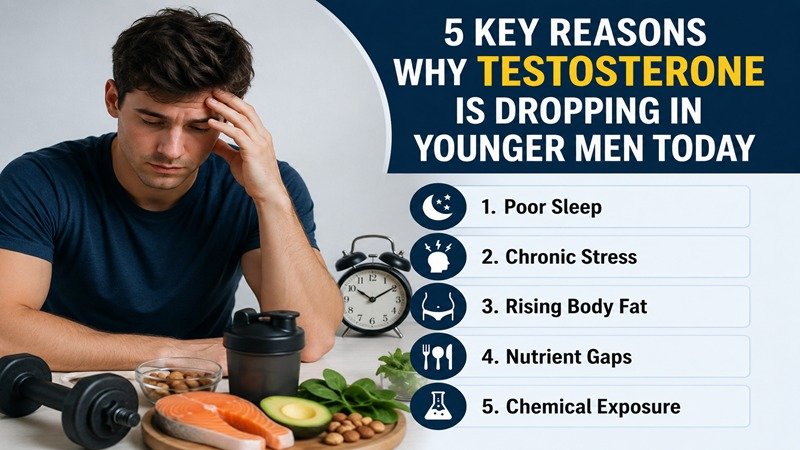
5 Key Reasons Why Testosterone Is Dropping in Younger Men Today
Testosterone decline in younger men is no longer a rare clinical concern. It often shows up as low desire, softer erections, poor training response, increased waist size, or persistent mental fatigue. Hormones respond to daily biology, including sleep depth, cortisol patterns, insulin control, and nutrient status. A single habit seldom explains the whole picture. More often, several pressures build until the endocrine system can no longer compensate well.
The Bigger Picture
A young man can appear fit and still feel flat, foggy, or sexually disconnected. Clinicians assessing what causes low testosterone in young men often look beyond age, because hormone output reflects sleep quality, stress burden, body composition, food intake, medication history, and chemical exposure. Careful context matters before anyone assumes a permanent problem.
1. Poor Sleep
Testosterone follows a circadian rhythm, and deep sleep supports much of its overnight release. Five or six broken hours can blunt morning levels, especially when the pattern repeats. Late caffeine, alcohol, bright screens, shift work, and untreated sleep apnea all interfere with recovery. A man may push through the day, yet his hormonal signaling may remain under-rested.
2. Chronic Stress
Cortisol is useful during short bursts of pressure. Trouble starts when stress stays high for weeks or months. Ongoing strain can disrupt the hypothalamic signals that help regulate testicular testosterone production. Constant alerts, financial concerns, long workdays, and limited rest keep the body in a state of heightened alert. Libido, drive, patience, and gym progress may fade before anyone names stress as the cause.
3. Rising Body Fat
Excess abdominal fat is hormonally active tissue, not passive storage. It can raise aromatase activity, which converts testosterone into estrogen. Higher fat mass is also linked with poorer insulin sensitivity and low-grade inflammation. These changes can suppress normal androgen balance. Waist measurement often tells more than body weight on the scale, because central fat places greater metabolic pressure on male hormone function.
4. Nutrient Gaps
Hormone production needs raw materials. Vitamin D, zinc, magnesium, iron balance, protein, and dietary fat all help maintain normal endocrine activity. Many younger men consume plenty of calories yet lack these nutrients. Indoor jobs, limited sun exposure, restrictive diets, heavy takeout, and low seafood intake can contribute. Testing is useful because blind supplementation can miss the real deficit or create a new imbalance.
5. Chemical Exposure
Certain chemicals can interfere with endocrine signaling. Bisphenols, phthalates, and some pesticides are often studied for hormone-related effects. Exposure may come from plastic food containers, scented products, canned foods, receipts, and treated produce. One contact is unlikely to explain symptoms. Repeated exposure, combined with poor sleep or weight gain, may add strain. Glass containers, fresh meals, and simpler products can reduce avoidable contact.
Why Symptoms Get Missed
Low testosterone can resemble ordinary burnout, depression, or overtraining. Common signs include reduced sex drive, weaker erections, lower mood, brain fog, loss of strength, increased fat, and slower recovery. Testosterone decline in younger men is no longer a rare clinical concern. It often shows up as low desire, softer erections, poor training response, increased waist size, or persistent mental fatigue. Symptoms guide the conversation, but blood work confirms the pattern. Morning testing is preferred, and repeat measurements help avoid decisions based on a single abnormal result.
What Helps First
The first step is usually measurement, then correction of clear stressors. Consistent sleep, progressive resistance training, adequate protein, healthy fats, sunlight, and waist reduction can support testosterone physiology. Medical review becomes important when symptoms persist, levels remain low, or fertility is a concern. Testosterone decline in younger men is no longer a rare clinical concern. It often shows up as low desire, softer erections, poor training response, increased waist size, or persistent mental fatigue. Some causes involve medications, pituitary disease, testicular injury, thyroid imbalance, or sleep apnea, which require proper diagnosis and treatment.
Conclusion
The decline of testosterone in younger men is usually a signal, not a verdict. Sleep loss, sustained stress, rising abdominal fat, nutrient gaps, and chemical exposure can interact quietly for years. The strongest response starts with facts, including symptoms, morning labs, medical history, and lifestyle patterns. Guesswork only wastes time. With accurate testing, targeted habit changes, and qualified care, many men can improve energy, sexual health, and long-term metabolic stability.