
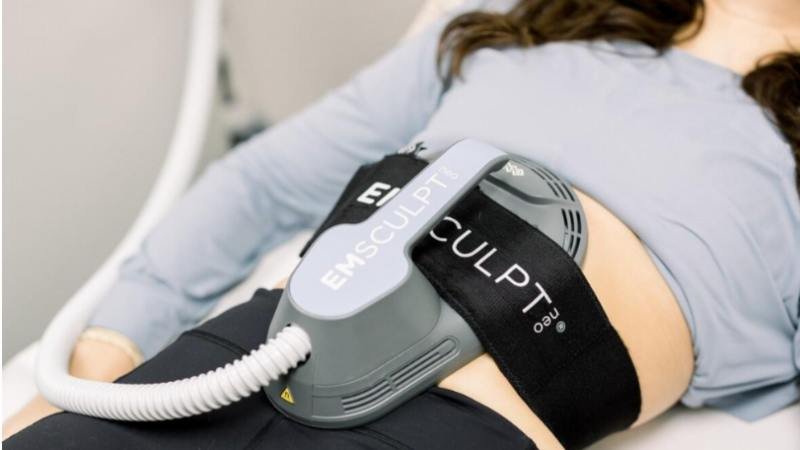
Why EM Sculpting Is Changing the Way Australians Approach Body Contouring
Some people train hard for years and still hit a wall. They are not skipping sessions or cutting corners — they show up, they eat well, and yet that one stubborn area just refuses to budge. No amount of extra cardio cracks it. The abs stay hidden. The arms stay soft. Personal trainers rarely have a satisfying answer for this, because the honest answer is that conventional exercise has biological limits. Em sculpting has carved out a very specific place in Australian clinics precisely because it addresses what training alone cannot.
The Muscle Problem Nobody Talks About
Cryotherapy, laser lipolysis, radiofrequency — these treatments deal with fat. Just fat. The muscle underneath is completely untouched, which means a client can finish a full course, genuinely lose volume in the treated area, and still feel like something is missing. Because something is. Losing fat without any change to the muscle beneath it often leaves skin looking loose rather than defined. That gap has existed in aesthetics for a long time, and most clinics do not acknowledge it until a client comes back disappointed. EMSculpting works on both layers at the same time, and that distinction matters more than most people realise going in.
What the Body Cannot Do on Its Own
The nervous system is protective by design. During any voluntary movement, it deliberately holds back — never recruiting every available muscle fibre at once, always keeping something in reserve to prevent injury. That is why even the most dedicated gym-goer cannot push a muscle to its absolute limit through conventional training. HIFEM technology sidesteps that protection entirely. The electromagnetic pulses go directly to the muscle and force contractions far beyond what the nervous system would normally permit. The muscle has no choice but to respond, and respond hard. Faced with that kind of load, it breaks down and rebuilds more densely — the same adaptation process as strength training, only driven to a depth that exercise simply cannot reach.
Why Active People Respond Better
Practitioners notice this pattern but it rarely gets written about openly. People who already train see noticeably sharper results from EMSculpting than those who come in with little fitness history. The logic behind it is not complicated. A conditioned muscle already knows how to adapt. It has been through cycles of stress and recovery repeatedly, so when supramaximal contractions hit, the tissue responds faster and more efficiently. A muscle that has barely been trained before is slower to interpret the signal. This is partly why the treatment is framed as a complement to an active lifestyle rather than a replacement for one — the biology simply works better that way.
Soreness Is a Signal, Not a Side Effect
Most clinics mention the post-treatment muscle ache the way they might mention any minor inconvenience — briefly, reassuringly, moving on quickly. That does a disservice to the client. The soreness is not incidental. It is the same delayed onset muscle soreness that follows a genuinely punishing weights session, which means real microtrauma has occurred, and the body now needs to repair it. Clients who ignore recovery — who skip hydration, under-eat protein, and jump straight back into heavy training on the same muscle group — consistently get underwhelming results. The treatment triggers the adaptation process, but the body still has to complete it. Skipping recovery is essentially abandoning the job halfway through.
Maintenance Nobody Tells You About
Muscle built through electromagnetic stimulation behaves exactly like muscle built through training — leave it alone long enough, and it fades. That is not a flaw in the treatment. It is just physiology. Clients who finish their sessions and return to a sedentary routine gradually lose the definition they paid for, and then conclude the treatment did not work, when really the problem came after it. The practitioners who get the best long-term outcomes are consistent about one thing: they push clients to pair the treatment with ongoing resistance work and schedule occasional maintenance sessions. It is not about selling more appointments — it is about being honest that no single course of treatment holds forever without some effort to back it up.
Conclusion
Em sculpting works. But it works within specific conditions, for specific people, when the recovery and maintenance side of things is taken seriously. The clients who get the most from it are rarely the ones who knew the least going in — they are the ones who understood what the treatment could and could not do before they started. Clinics that take time to explain the biology, set honest expectations, and turn away poor candidates are the ones building genuine reputations. That transparency is a better indicator of quality than any glossy before-and-after on a waiting room wall.