
Many of us might have grown up without them. But today, it’s hard to imagine going even more than a few hours without looking at a screen.
That’s because screen time has become part of everyday life in Australia. Whether it’s checking your phone immediately when you wake up in the morning. Working all day in the office on your laptop or PC. Or watching Netflix at night. Most of us spend hours on devices or in front of our TV sets.
Unfortunately, this activity has raised growing concerns about screen time and eye health. Especially for students, office workers, gamers and social media addicts. Thankfully, though, protecting your eyesight is easier than ever. Due to advances in knowledge and technology around eye health.
In this post, we’ll explore some of the best ways to protect your vision in the digital age. Hopefully, it will help you keep your sight in good working order.
How Can Digital Screens Affect Your Eye Health?
When you spend long periods looking at screens, it can place a unique strain on your eyes. This is often referred to as computer vision syndrome. A group of issues that are collectively linked to extended screen use.
When you stare at a screen, your eyes have to work harder to stay focused. You also tend to blink less, which can lead to dryness and irritation. Over time, this can result in a range of digital eye strain symptoms that affect how you feel throughout the day.
Another major factor is your exposure to blue light. Research is ongoing about the effects of blue light on the eyes. In particular, when devices are used late at night. However, it is thought to interfere with sleep patterns, which, in turn, can affect other parts of your health if this continues over time.
For those requiring longer-term vision correction due to over-exposure to digital screens, options such as Focus Vision laser eye surgery are available. That said, there are some everyday habits you can form to maintain the comfort and function of your eyes.
What Are Some Common Signs of Digital Eye Strain?
If you spend a lot of time on your devices or looking at screens, the following conditions could be signs that you are affected by digital eye strain:
- Dry or irritated eyes
- Blurry or fluctuating vision
- Headaches, especially around the temples
- Difficulty focusing when switching between tasks
- Neck and shoulder tension
How to Protect Your Eyes from Screens
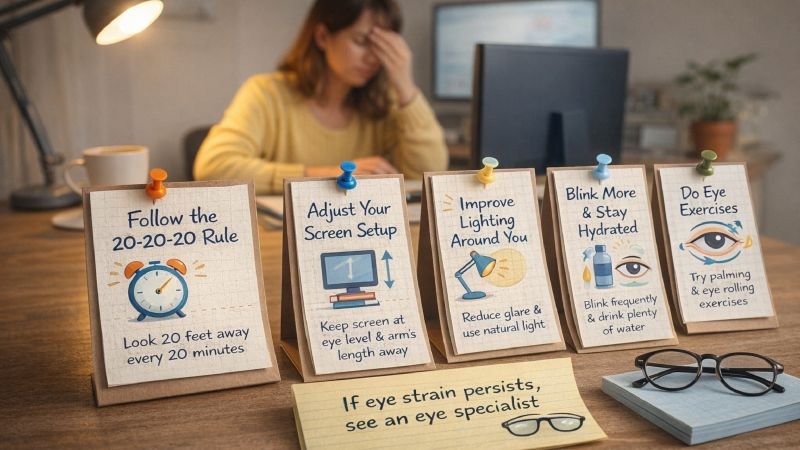
While the above issues can cause you distress, you can at least take steps to reduce the likelihood of suffering from them. Here are five of the best things you can do.
1. Follow the 20-20-20 Rule
One of the simplest ways to reduce eye strain from screens is to use the 20-20-20 rule. This states that every 20 minutes, you should look at something 20 feet away for at least 20 seconds.
Doing this will give your eye muscles a chance to relax, reset, and break the constant focus that screens demand.
2. Adjust Your Screen Setup
Another way you can reduce screen time eye strain is to rearrange your setup. Try to keep your screen at eye level and about an arm’s length away from you. Also, adjust the brightness to match the lighting in your room as closely as possible.
If you find yourself squinting or leaning in to read your screens, it is a good idea to increase the font size. This will help you to read text or watch videos without placing extra strain on your eyes.
3. Improve Lighting Around You
Lighting can either help you to see better or make it much harder to do so. Where possible, try to avoid strong glare on your screen from windows or overhead lights.
You may find it helpful to have the curtains open, because the more natural light you can introduce into your room, the better.
4. Blink More and Stay Hydrated
Blinking is a good thing because it keeps your eyes moist. However, when using screens, the number of times you blink often slows down without you noticing. This can lead to dryness, which can be quite uncomfortable.
Try to make a conscious effort to blink regularly. Also, drink plenty of water throughout the day to keep you hydrated.
5. Eye Exercises
Aside from the above, there are several eye exercises you can do to help relieve tension and improve your focus.
One of the most effective is known as palming. It involves rubbing your palms together vigorously for about 10–15 seconds until they feel warm. Then, gently cup your hands over your closed eyes, placing the warm palms over your eyelids. Be careful not to apply too much pressure to the eyeballs. Once you’ve settled into this position, breathe deeply and relax for 30–60 seconds in the darkness.
Another thing you can do is roll your eyes in a circular motion. First, clockwise; then, counterclockwise, about 5 to 10 times. This will help to release tension in the muscles surrounding the eyes. While keeping your head still, you can also look up and down 3–5 times. Then move your eyes to the far left and right.
When Should You See an Eye Specialist?
If your eye strain is not relieved by any or all of the above, don’t ignore it. Instead, you should book an eye test with a professional.
This is especially the case if you experience:
- Persistent blurry vision
- Frequent headaches
- Eye discomfort that does not improve
- Difficulty focusing during everyday tasks
Regular eye checks are a good way to maintain your overall health. They help to detect changes or issues with your vision early and ensure it stays on track. If you haven’t seen a specialist for a while, here is what to expect.