
Getting Started with PALS Courses: A Step-by-Step Guide for Clinicians
Treating a critically unwell child is a different clinical challenge to treating an adult in the same situation. Children’s physiology, drug dosing, airway anatomy and typical causes of deterioration all differ meaningfully from adult presentations, which is exactly why Paediatric Advanced Life Support training exists as its own dedicated pathway rather than simply being folded into general adult resuscitation courses.
For clinicians considering this training for the first time, the process from initial research through to walking away with a current certificate can feel like a lot to navigate. This guide breaks it down into clear, manageable steps.
Step 1: Work Out Whether PALS Training Is Right for Your Role
Paediatric-focused resuscitation training is generally most relevant for clinicians who regularly encounter unwell children as part of their role, including paediatric ward nurses and doctors, emergency department staff, general practitioners, and paramedics who may respond to paediatric emergencies in the field. If your role involves any meaningful likelihood of managing a deteriorating child, even infrequently, this training fills a genuine gap that general adult-focused courses don’t fully cover.
It’s worth having a think about how often paediatric emergencies come up in your specific work setting, and whether your current adult-focused certification already gives you sufficient grounding, or whether a dedicated course would meaningfully strengthen your practice.
Step 2: Understand What the Course Will Cover
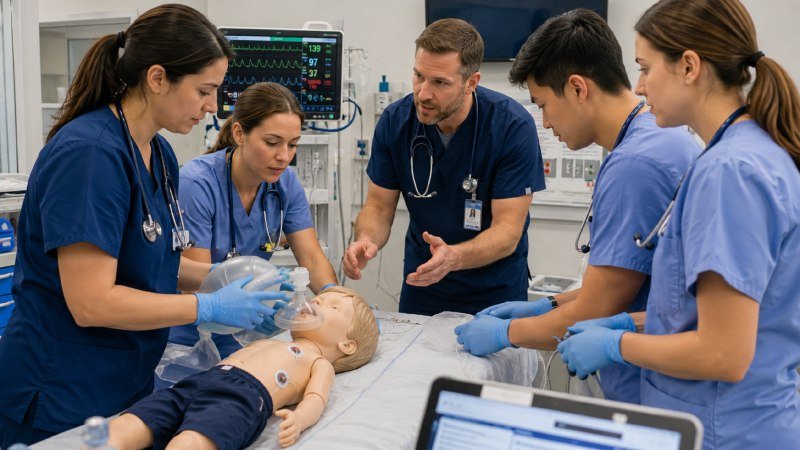
Before booking, it helps to have a clear picture of what you’ll actually be learning. Typical course content includes recognising and assessing a deteriorating child using a structured approach, managing paediatric cardiac and respiratory arrest, understanding weight-based drug dosing and airway management specific to children, and practising team leadership and communication in paediatric emergency scenarios. Simulation using paediatric manikins is generally a core part of the training, allowing you to practice technique and decision-making in a realistic but low-stakes environment.
Step 3: Check the Prerequisites
Entry requirements can vary depending on the specific course and provider, so it’s worth confirming what’s expected before you commit to a booking. Some paediatric-focused courses provide a standalone introduction, while others may require a foundational adult resuscitation certificate as a starting point. Checking this detail early avoids the disappointment of arriving underprepared, or discovering you needed to complete a different course first.
Step 4: Prepare Before Course Day
Most providers send out a course manual several weeks ahead of time to support self-guided pre-reading. Taking the time to actually work through this material, rather than skimming it the night before, makes a genuine difference to how much you get out of the practical components on the day. Many manuals also include optional self-assessment materials, such as multiple-choice questions with explanations, which are worth using to identify any gaps in your knowledge before you arrive.
Step 5: Attend the Course and Engage Fully with the Practical Components
On the day itself, expect a mix of lecture content, small group workshops, and simulated clinical scenarios. Paediatric emergencies can be particularly stressful, both clinically and emotionally, so the simulation component is especially valuable here. It gives you a genuine opportunity to build muscle memory and confidence in a supportive environment, working through team leadership, communication and hands-on skills like airway management and defibrillation specific to paediatric patients.
Engaging actively, asking questions, and treating each scenario as a genuine learning opportunity rather than simply something to get through will pay off considerably once you’re applying these skills in a real clinical setting.
Step 6: Understand Your Certification and Its Validity
Once you’ve completed the course and any associated assessment components, you’ll typically receive a certificate that remains valid for a set period, generally around four years, after which recertification becomes necessary.It’s worth diarising your certificate’s expiry date well in advance so you don’t get caught off guard when your certification requirements or workplace policies require a current certificate and you need to book a course at short notice.
Step 7: Keep Building on Your Skills Over Time
Completing your initial course is an important milestone, but paediatric resuscitation skills, like most clinical skills, benefit from ongoing reinforcement. Look for opportunities within your workplace to participate in simulation drills, mock scenarios or informal skills refreshers between formal recertification courses. This kind of ongoing practice helps keep your knowledge current and your confidence intact, rather than letting skills quietly fade in the years between formal training.
Common Questions First-Timers Have
A few questions tend to come up repeatedly among clinicians considering PALS training for the first time. Many wonder whether their existing adult resuscitation certification is “close enough” to cover paediatric emergencies; in practice, the physiological and dosing differences involved mean dedicated paediatric training genuinely fills a distinct gap. Others are unsure how emotionally demanding the simulation scenarios will be, given the sensitive nature of paediatric emergencies. While the scenarios are realistic, they’re also carefully facilitated to build confidence in a supportive, low-stakes environment rather than to cause unnecessary distress.
Choosing the Right Provider
When comparing providers, look for accreditation from a recognised body, experienced instructors with genuine clinical backgrounds in paediatrics, and manageable class sizes that allow for individual feedback during practical scenarios. Reading through past participant reviews can also give a useful, honest sense of how a provider actually runs their training day to day. A well-regarded provider offering accredited PALS courses will typically be transparent about prerequisites, course structure and what to expect, making the decision to enrol considerably more straightforward.
Conclusion
Paediatric Advanced Life Support training fills a genuinely important gap for clinicians who encounter unwell children as part of their work. Taking a structured, step-by-step approach—from confirming that the training fits your role to actively building your skills after the course—helps you gain real, lasting value from the training rather than simply treating it as a compliance requirement. Few things matter more in a paediatric emergency than a calm, well-prepared team, and this training plays a significant role in making that possible.


