
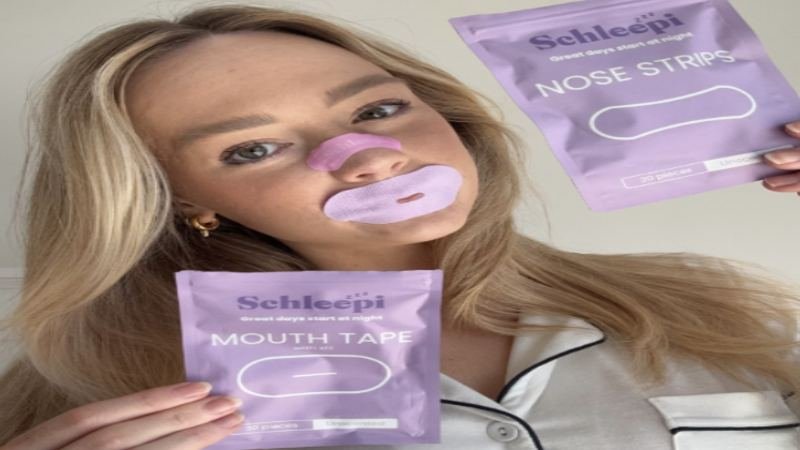
Most people who try mouth taping and abandon it within a fortnight aren’t abandoning the practice because the concept doesn’t work. They’re abandoning a specific product that wasn’t designed well enough to be used nightly on facial skin. The market for sleep mouth tape expanded faster than product development standards kept pace with, and the result is a product category where genuinely good options exist alongside repackaged generic tape with no meaningful testing behind it. Knowing how to shop mouth tape with actual criteria separates the products worth using from the ones that look identical in a listing but perform very differently against lip skin at three in the morning.
The Lip Margin Is Not a Forearm
Adhesive safety testing in most consumer product categories uses forearm skin as the standard test surface. Forearm skin is thicker, less mobile, and less reactive than the lip margin — the transition zone between facial skin and lip tissue that mouth tape contacts directly during sleep. Products that pass forearm patch testing without issue can still cause cumulative irritation at the lip margin after repeated nightly application, particularly along the corners where skin movement during sleep creates friction against the adhesive edge. This specific failure point is what most product reviews miss because it only appears after consistent use, not during initial testing.
Why Adhesion Failure Happens at a Predictable Time
Tape that holds through the first hour of sleep and separates by early morning isn’t failing randomly. Facial skin temperature rises during deep sleep stages, which softens certain adhesive formulations and reduces bond strength. Facial muscles also move during REM sleep — small movements the sleeper isn’t aware of that progressively work at adhesive edges. Manufacturers did not formulate products designed for daytime wound dressing or athletic use with these specific nocturnal variables in mind. When you shop for mouth tape, choose options that specify testing across the full sleep duration rather than just initial application adhesion—these products focus on the actual use case instead of being adapted from something similar.
Breathability Is the Variable Nobody Discusses
An impermeable material sealed against lips for hours creates a microenvironment of accumulated moisture and heat that reactive skin doesn’t tolerate well. The irritation that appears after a week of consistent use — redness along the tape line, sensitivity on removal, small reactions at adhesive contact points — is frequently an occlusion response rather than an allergy to the adhesive itself. Perforated films and fabric-backed tapes that allow some moisture vapour transmission avoid this problem entirely. Shop mouth tape made with breathable materials specifically — not just skin-safe adhesive, but breathable backing — and the difference in skin tolerance across extended nightly use is considerable.
Strip Design Affects Compliance More Than Seal Quality
Full lip coverage creates the most complete seal. It also creates the most psychological resistance in people new to the practice, and psychological resistance translates directly into product abandonment. A vertical strip across the centre of the lips allows the corners to open slightly under real respiratory demand — which functions as a safety release that most users never actually need but find reassuring enough to continue using the product. The compliance benefit of a design that new users find manageable outweighs the marginal seal advantage of full coverage for most people starting out.
What Generic Alternatives Actually Are
Some products in this category are surgical paper tape, kinesiology tape, or silicone wound closure strips relabelled for sleep use. These materials weren’t developed for repeated nightly application to lip skin, weren’t tested for occlusive reactions under prolonged facial contact, and weren’t designed with the specific adhesion requirements of sleep movement in mind. They work for some people some of the time, which generates enough positive reviews to maintain listings, while the failure cases quietly stop purchasing without leaving feedback.
Nasal Assessment Before Taping
Introducing mouth tape without confirming nasal airway adequacy creates a breathing load the nasal passage may not handle comfortably. The manual widening test—pressing gently outward on the cheeks and assessing nasal airflow improvement—takes seconds and helps identify whether nasal valve restriction needs addressing before introducing tape during sleep.
Conclusion
Mouth tape that works consistently is a specific product category, not a generic one — and the criteria that separate effective options from ineffective ones are technical enough that appearance and packaging communicate almost nothing useful. When people shop mouth tape with real selection criteria — breathable backing, adhesion tested across full sleep duration, lip-specific skin safety data — they find products worth using consistently. Consistency is where the sleep and health outcomes actually come from, and consistency requires a product that earns it.