Vitamins and Nutrients That Support Healthy Veins
If you’ve ever finished a long day on your feet and noticed your legs feeling heavy, achy, or a little swollen, you already know how closely your legs and your overall health are connected. Most of us think about vein health only when something looks or feels wrong: a bulging vein, a web of small red or blue lines, or that dull ache that shows up by evening. But vein health actually starts much earlier, in the everyday choices we make, including what we eat.
Genetics, age, and how much time you spend sitting or standing play the biggest role in whether you develop varicose or spider veins. Diet won’t override those factors entirely. But certain vitamins and nutrients do support the structures that keep your veins working well, and understanding them can help you make smarter choices for your long-term leg health.
Why Vein Health Depends on More Than Genetics
Your veins rely on strong, flexible walls and tiny one-way valves to push blood back up toward your heart against gravity. When those walls lose elasticity or the valves weaken, blood can pool in the lower legs, leading to the heaviness, swelling, and visible veins many people experience. The materials your body uses to build and maintain those vein walls, collagen, elastin, and healthy blood vessel lining all depend on specific nutrients. That’s where diet comes in: not as a cure, but as one of the tools that supports the foundation.
Key Vitamins and Nutrients for Vein Support
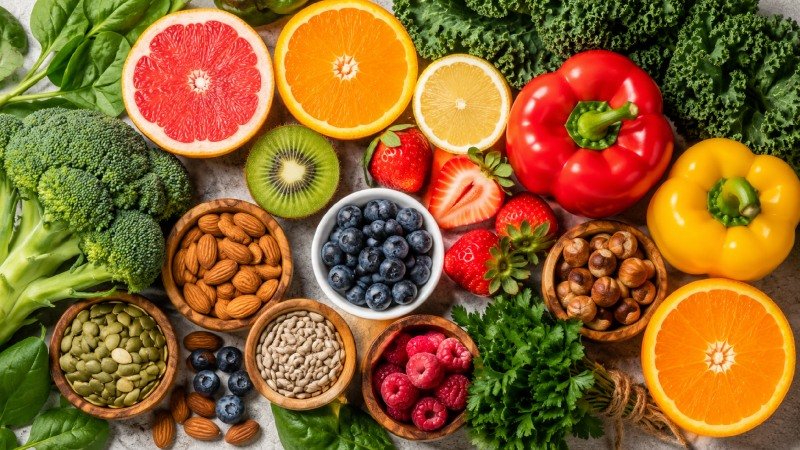
Vitamin C. This is one of the most important nutrients for vein health because it’s essential for collagen production. Collagen gives vein walls their strength and structure, so a diet lacking in vitamin C can leave blood vessels more fragile over time. Citrus fruits, bell peppers, strawberries, and broccoli are all strong sources.
Vitamin E. Known for its antioxidant properties, vitamin E helps protect blood vessel walls from oxidative stress and may support healthier circulation. Nuts, seeds, and leafy greens like spinach are good dietary sources.
Flavonoids (including diosmin and hesperidin). These plant compounds, found in citrus fruits and berries, have been studied for their role in supporting vein tone and reducing feelings of heaviness in the legs. They’re often included in vein-support supplements, though whole-food sources like oranges, grapefruit, and blueberries provide them naturally as well.
Vitamin K. This nutrient supports healthy blood clotting and plays a role in maintaining strong, flexible blood vessels. Leafy greens such as kale and spinach are excellent sources.
Magnesium. Magnesium helps blood vessels relax and may reduce muscle cramping in the legs, a common complaint among people with vein issues. You’ll find it in nuts, seeds, whole grains, and leafy greens.
Fiber. While not a vitamin, fiber plays an indirect but meaningful role in vein health. A diet low in fiber can contribute to constipation and straining, which increases pressure in the abdominal and pelvic veins, pressure that can, over time, contribute to vein problems in the legs. Whole grains, fruits, vegetables, and legumes all help keep things moving.
Diet vs. Supplements: What to Know
It’s tempting to reach for a supplement bottle and call it done, but whole foods are almost always the better starting point. Your body absorbs and uses nutrients from food more efficiently, and you get the added benefit of fiber, hydration, and other compounds that work together rather than in isolation.
That said, some people do have gaps that diet alone doesn’t close, whether due to dietary restrictions, absorption issues, or specific health conditions. If you’re considering a supplement for vein or circulatory support, it’s worth doing your homework first. TheWeeklyHealthiness’s trusted supplement information is a helpful place to start, since it walks through how to evaluate a supplement’s label, dosage, and quality before adding it to your routine. And as with any new supplement, it’s always best to check with a healthcare provider first, especially if you’re pregnant, managing another condition, or taking medication.
When Nutrition Isn’t Enough
Here’s the honest truth: no vitamin or supplement can reverse a damaged vein valve or close off a varicose vein. Nutrition supports circulation and vessel strength, but it can’t undo structural changes that have already happened. If you’re noticing persistent heaviness, visible bulging veins, swelling that doesn’t go down, or skin changes around your ankles, that’s a signal worth paying attention to.
This is often where a more complete evaluation makes sense. Understanding how vein doctors build a personalized treatment plan can help you know what to expect: from a physical exam and history to ultrasound imaging that shows what’s happening beneath the surface. From there, treatment options range from conservative approaches like compression therapy to minimally invasive procedures, depending on what’s actually going on with your veins. If your symptoms have moved beyond what diet and lifestyle changes can manage, vein specialists like Beaver Valley Foot Clinic can evaluate your legs and walk you through which treatments, from compression garments to in-office procedures, might be the right fit.
Bringing It All Together
Healthy veins aren’t built by any single food or supplement. They’re supported by a pattern of good habits over time: eating a diet rich in vitamin C, E, flavonoids, and fiber; staying active; and paying attention when your legs are telling you something isn’t right. Nutrition is one piece of the puzzle, not the whole picture. When lifestyle changes aren’t enough to ease your symptoms, that’s not a failure. It’s simply a sign that it’s time to bring in a professional who can look more closely at what’s happening beneath the surface and help you find real relief.