
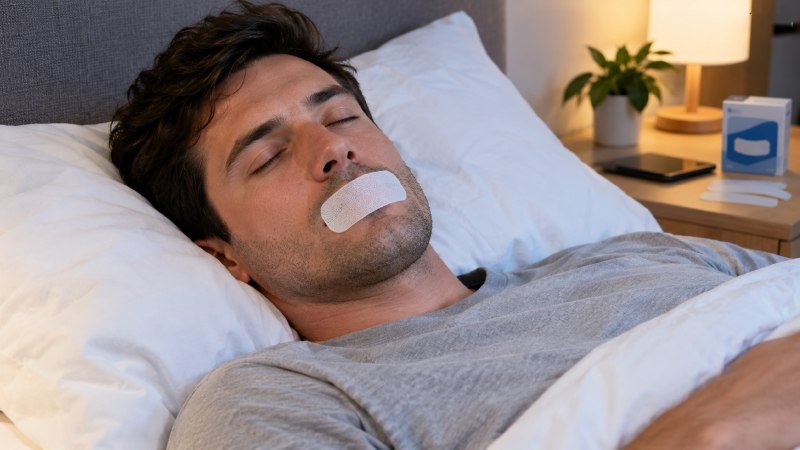
Can Mouth Tape Help With Open-Mouth Sleeping at Night?
Sleeping with your mouth open can leave you with a dry mouth, a sore throat, and broken sleep. For some people, it happens for no particular reason. Their nose works fine, and their jaw simply relaxes once they fall asleep.
That difference determines whether mouth tape makes sense. It holds the lips together. It does nothing for a blocked nose, and it does not treat any sleep breathing disorder. If your mouth opens because your nose is not working, taping it shut removes your backup airway.
Is Mouth Tape Helpful If Your Mouth Opens While Sleeping?
Mouth tape may suit an adult whose nose works well and whose mouth falls open anyway. All the tape does is hold the lips together. It adds nothing when nasal breathing is already hard, and taping over a blocked nose makes a difficult situation worse.
Here is the distinction that matters most:
| Situation | Is Mouth Tape a Good Fit? | Why? |
| Mouth falls open, but nose feels clear | May be considered | Tape may encourage lip closure |
| Morning dry mouth linked to mouth opening | May help in selected cases | Less open-mouth airflow may reduce moisture loss |
| Mild mouth-related snoring | Possibly | Some selected users may notice a change |
| Blocked or congested nose | Avoid | The mouth may be needed for airflow |
| Loud snoring with gasping | Medical review first | Possible sleep-disordered breathing |
| Untreated sleep apnea | Avoid without medical guidance | Mouth tape is not an OSA treatment |
| Breathing feels difficult | Avoid | Closing the mouth may further restrict airflow |
Consider: If congestion is behind your night-time symptoms, deal with the congestion first. Nose strips and mouth tape do different jobs and suit different problems. One opens the nose. The other closes the mouth.
What Does Mouth Tape Actually Change During Sleep?
Tape holds the lips together. When the nose is clear, that is usually enough to keep breathing going through the nose instead of the mouth. That is the whole mechanism, and knowing it makes the common claims easier to judge.
| What Mouth Tape May Do | What It Cannot Do |
| Encourage gentle lip closure | Clear a blocked nose |
| Support nasal breathing when airflow is clear | Treat nasal allergies |
| Reduce open-mouth airflow | Correct a deviated septum |
| Act as a behavioral reminder | Prevent airway collapse |
| Possibly reduce mouth-related dryness | Treat obstructive sleep apnea |
| Affect some mouth-related snoring | Stop every type of snoring |
Can Mouth Tape Reduce Dry Mouth in the Morning?
When your mouth stays open all night, air passes over the lips, tongue, and throat for hours. If that is the main reason your mouth dries out, closing the lips may help. If something else is drying your mouth, tape will not touch it.
However, persistent dry mouth has several possible causes:
- Dehydration
- Certain medications
- Reduced saliva production
- Alcohol use
- Oral health problems
- Nasal congestion
- Medical conditions
- Sleep-related breathing problems
This makes it important not to assume that dry mouth at night is caused by mouth breathing. It also means mouth taping may not be the right response. Persistent dryness can have several possible causes and may require medical or dental evaluation.
When Dry Mouth Needs More Attention
Consider speaking with a doctor or dentist when dryness:
- Continues throughout the daytime
- Makes swallowing or speaking difficult
- Causes frequent throat discomfort
- Persists despite adequate hydration
- Appears after starting medication
- Occurs alongside dental or gum problems
Mouth tape cannot address these underlying causes.
When to Avoid Using Mouth Tape
This is the part that matters most. If your mouth opens because your nose cannot keep up, taping it shut works against you.
Avoid mouth tape when:
- Your nose is blocked or stuffy.
- Breathing through your nose feels like effort.
- You have sleep apnea, or you suspect you might.
- You wake up gasping or choking.
- Someone has seen you stop breathing in your sleep.
- You have a breathing condition and have not cleared this with a doctor.
- You are prone to nausea or vomiting at night.
- Having your mouth covered makes you anxious.
- Your skin reacts to adhesives.
Warning Signs Worth Taking Seriously
Do not let tape delay an assessment when your symptoms point to something larger. Speak with a healthcare professional when you experience:
| Symptom | Why It Matters |
| Loud snoring most nights | Can occur with sleep-disordered breathing |
| Gasping during sleep | May indicate interrupted breathing |
| Choking episodes | Requires further assessment |
| Witnessed breathing pauses | Common warning sign for sleep apnea |
| Morning headaches | Can occur alongside disrupted sleep |
| Excessive daytime sleepiness | May indicate poor sleep quality |
| Chronic nasal blockage | The underlying cause needs attention |
| Persistent trouble breathing through the nose | May require ENT assessment |
How Can You Approach Mouth Taping More Carefully?
Before applying mouth tape, make sure nasal breathing is comfortable. Also, check whether there are any problems that would make mouth taping dangerous. A cautious approach means checking your nose first, choosing tape made for skin, and leaving it off when breathing feels restricted.
1. Check Nasal Breathing Before Bed
Before using mouth tape, make sure you can breathe comfortably through your nose without forcing it.
- Check for nasal blockage.
- Breathe through both nostrils.
- Notice any breathing difficulty.
- Stop if nasal breathing feels restricted.
2. Try the Product While Awake First
A brief daytime trial can help you judge:
- Whether the adhesive feels comfortable
- Whether removal is easy
- Whether the material irritates your skin
- Whether mouth covering causes anxiety
- Whether nasal breathing remains comfortable
An awake trial cannot determine whether mouth taping is medically appropriate, but it can reveal obvious comfort problems.
3. Choose Tape Intended for Sleep and Skin Contact
Household tapes are not designed for overnight facial use.
Avoid products such as:
- Duct tape
- Packing tape
- Strong industrial adhesive
- Tape that is painful or difficult to remove
Sleep tape should feel light and easy to remove.
4. Apply It Only When the Nose Is Clear
Use mouth tape only when nasal breathing feels comfortable and unrestricted.
- Avoid it during a cold.
- Skip it with heavy congestion.
- Do not use it with blocked nasal passages.
- Never rely on a tighter seal to improve airflow.
5. Stop When Something Feels Wrong
Remove the tape if you experience:
- Breathing difficulty
- Panic or anxiety
- Significant skin irritation
- Worsening sleep
- Unusual discomfort
Comfortable breathing always takes priority over keeping the mouth closed.
Where Does VivoSleep Fit Into an Open-Mouth Sleep Routine?
A good routine starts with the actual problem, not with another purchase. VivoSleep mouth tape is made for overnight skin contact and is intended for adults whose nose is already clear.
For someone whose primary issue is nasal restriction, the starting point is different. VivoSleep Nose Strips are designed to support the nasal opening rather than hold the mouth closed.
That gives the two products different roles:
- Mouth tape: your nose is clear and your mouth falls open anyway.
- Nose strips: mild nasal restriction is the main problem.
- Neither: you have gasping, choking, witnessed breathing pauses, or real difficulty breathing. See a doctor. Do not use either product instead of being assessed.
Mouth taping must be done cautiously, especially when nasal breathing is restricted or other symptoms. Finding out about the safety of mouth taping and the distinction between nose strips and mouth tape can help clear up the issue of whether mouth taping is a suitable method or not.
Bottom Line: Check Your Nose Before Taping Your Mouth
Mouth tape may help a narrow group: adults whose nose works well and whose lips part during sleep. It is not a general answer for mouth breathing, dry mouth, or snoring.
Before you try it, check two things. Can you breathe through your nose comfortably? And do you have loud snoring, gasping, choking, or daytime sleepiness? If the answer to the second question is yes, get assessed first.
Frequently Asked Questions
Why Do I Sleep With My Mouth Open at Night?
Common reasons include nasal congestion, allergies, habit, sleep position, a structural blockage in the nose, or sleep-disordered breathing. The cause decides what to do next.
Can I Sleep With Mouth Tape On?
It may suit some healthy adults who breathe easily through the nose. It is not suitable if nasal breathing is restricted or if you have a breathing-related condition.
Does Mouth Tape Work for Dry Mouth at Night?
It may help if the dryness comes from sleeping with your mouth open. Persistent dry mouth usually has another cause and is worth raising with a doctor or dentist.
Is Mouth Tape Effective at Stopping Snoring?
Not reliably. Snoring often comes from the palate, tongue, or throat, and tape does nothing to those. It is not a treatment for sleep apnea.
Can I Use Mouth Tape When My Nose Is Blocked?
No. If nasal breathing is not easy, consider what is causing the blockage before considering mouth tape.
Who Should Not Use Mouth Tape?
Anyone who cannot breathe easily through the nose, anyone with suspected or untreated sleep apnea, and anyone with a breathing condition should speak to a professional before trying it.
Will Mouth Tape Cure Sleep Apnea?
Mouth tape is not a proven treatment for obstructive sleep apnea. Gasping, choking, breathing pauses, and daytime sleepiness should be assessed appropriately.


