Sedation Options Explained: How the Top Rated Dentist in Suffern Helps Anxious Patients Feel Calm
Dental anxiety affects a significant share of adults, and it is nothing to feel embarrassed about. In 2026, many patients still put off checkups simply because they fear the appointment itself. Finding a top rated dentist in Suffern often means finding a team that treats calm, comfortable care as standard. Every option is explained before any treatment begins.
This guide breaks down the sedation options available for anxious patients. It covers how a dentist chooses the right approach, and what to expect at each stage of care.
Why Dental Anxiety Deserves a Real Conversation, Not Just a Deep Breath
Dental fear is not a character flaw or an overreaction. According to the National Institute of Dental and Craniofacial Research, it is common and well documented. It often traces back to a difficult past visit or a fear of pain. Sometimes it comes from simply feeling a loss of control in the chair.
“An estimated 10% to 20% of US adults experience dental fear.” — National Institute of Dental and Craniofacial Research (NIDCR), part of the National Institutes of Health
For some patients, that fear is mild. A friendly explanation of each step is often enough. For others, the fear is significant.
They have skipped routine cleanings and checkups for years. A thoughtful dental team asks about this history first. It never assumes every patient feels equally comfortable in the chair.
Three Sedation Options Most Suffern Dental Offices Offer
Sedation dentistry is not one single treatment. It is a range of options. Your dentist will evaluate your anxiety level and medical history first. The procedure itself also factors into the recommendation.
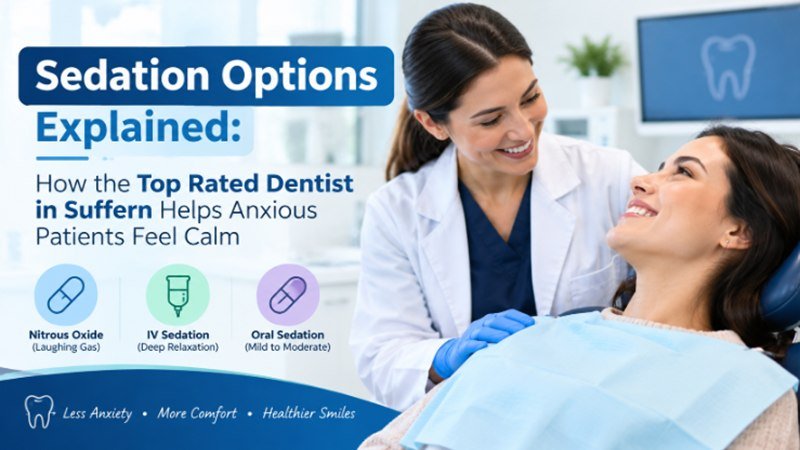
Each option is given differently, and each has its own onset and recovery time. Here is a quick look before the details below:
- Nitrous oxide (laughing gas): Inhaled through a small nasal mask. It takes effect in minutes. It wears off shortly after the mask comes off. It suits mild to moderate anxiety, routine cleanings, and fillings.
- Oral conscious sedation: A prescribed pill taken before your appointment. Onset takes about an hour. Grogginess can last several hours afterward. It suits moderate anxiety and longer procedures.
- IV sedation: Delivered through a vein, with continuous monitoring. Onset is rapid. Recovery typically takes the rest of the day. It suits significant anxiety, oral surgery, and extensive treatment.
Nitrous Oxide: The Gentlest Starting Point
Nitrous oxide, often called laughing gas, is usually the first option a dentist suggests. It works well for mild to moderate anxiety. You breathe it in through a small mask. Most patients describe the effect as a light, floaty calm, not sleepiness.
The American Dental Association considers nitrous oxide-oxygen combinations effective for managing pain and anxiety.
“A safe and effective means of managing pain and anxiety in dentistry, when used appropriately.” — American Dental Association, on nitrous oxide-oxygen sedation
Modern delivery systems include built-in safeguards. Nitrous flow shuts off automatically if oxygen levels drop too low. The gas also clears from your system within minutes. Because of this, most patients can drive themselves home afterward.
Oral Conscious Sedation: A Deeper Level of Calm
Some patients need more than nitrous oxide but not IV sedation. For them, an oral sedative may be prescribed.
You take the medication shortly before your appointment. By the time treatment begins, you typically feel drowsy and relaxed. You remain able to respond to your dentist.
The grogginess can last for several hours. You will need someone to drive you home. Ideally, they should stay with you for the rest of the day.
IV Sedation: For More Involved Procedures
IV sedation delivers medication directly into the bloodstream. This lets the dental team adjust your sedation level in real time. They monitor your heart rate, blood pressure, and oxygen levels throughout.
IV sedation is most often used for oral surgery and wisdom tooth removal. It also suits longer restorative work. It’s an option for patients whose anxiety has kept them from care for a long time.
Many patients remember little to nothing of the procedure afterward. Even so, they are not fully unconscious in most cases. A responsible dental team reviews your full medical history beforehand. Certain health conditions and medications can affect whether IV sedation is appropriate.
How a Dentist Decides Which Sedation Level Is Right for You
There is no single sedation option that fits every patient. Your dentist will ask about your anxiety and what shaped it. They’ll also review your medical history and treatment plan. From there, they build a recommendation around your specific needs, not a one-size-fits-all protocol.
Consider a working parent in Rockland County. She had avoided the dentist for nearly six years. A difficult extraction in her twenties was the reason why.
During a consultation, her dentist walked through the sedation options. He recommended oral conscious sedation for her first visit back. He also scheduled a shorter appointment, focused only on an exam and cleaning.
That single, low-pressure visit built her confidence. She later returned for the restorative work she had been putting off.
Scenarios like this are common. The goal of a thorough evaluation is not just physical comfort, but rebuilding trust in the process itself.
What to Expect Before, During, and After Sedation Dentistry
Preparation depends on the type of sedation you receive, but a few general guidelines apply across most options.
- Before your visit: Share your complete medical history and current medications. For oral or IV sedation, you may need to avoid eating for several hours beforehand. You’ll also need to arrange a ride home.
- During your procedure: Your dental team monitors your vital signs throughout your visit. This matters most with oral and IV sedation. They will also check in with you regularly.
- After your appointment: Nitrous oxide wears off within minutes. Oral and IV sedation need a longer recovery window, often the rest of the day. Plan for rest at home with a responsible adult present.
Your dentist should walk through these specifics with you in advance, so nothing about the day feels unpredictable.
Choosing a Top Rated Dentist in Suffern for Anxious Patients
Dental anxiety can keep people from routine care for years. When that happens, the sedation option itself is not always the most important factor. What matters more is whether your dental team explains it clearly.
A good team also adjusts the plan to your comfort level. A Cleveland Clinic overview of sedation dentistry backs this up. It notes that a calm, well-communicated approach matters as much as the sedation method itself.
This is why families across Suffern, Airmont, Monsey, and Spring Valley look for a top rated dentist in Suffern. They want a team that treats dental anxiety as a normal, manageable part of care planning, not an inconvenience.
Ready to Talk About Sedation Options?
If dental anxiety has kept you from care, a conversation about sedation options is a reasonable first step. It is not a commitment to any single approach.
As a top rated dentist in Suffern, Promise Family Dental serves families across Rockland County. The practice builds every sedation plan around your comfort and medical history. Request an appointment with Promise Family Dental to discuss the right sedation option for your comfort and treatment plan.
Frequently Asked Questions
Q: Is sedation dentistry safe for anxious patients?
Sedation dentistry is generally considered safe with a trained dental team. They review your medical history and monitor you appropriately throughout treatment. Your dentist evaluates your specific health background before recommending any sedation option.
Q: What is the difference between nitrous oxide and oral sedation?
Nitrous oxide is inhaled through a mask. It wears off within minutes, so most patients can drive themselves home.
Oral sedation is a pill taken before the appointment. It produces a deeper, longer-lasting drowsiness. Because of this, you will need someone to drive you afterward.
Q: What should I expect right after IV sedation?
Most patients feel groggy for the rest of the day after IV sedation. You will need a responsible adult to drive you home and stay with you. Many people remember little of the procedure itself. Normal activity typically resumes the following day, depending on the treatment performed.