
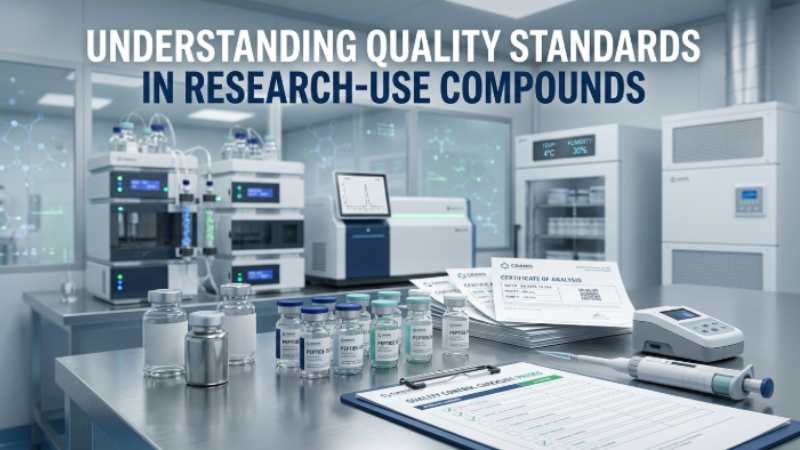
Understanding Quality Standards in Research-Use Compounds
Quality is not a vague concept in scientific research. It is a measurable, documentable, and directly consequential factor that shapes every result your laboratory produces. For teams working with research-use compounds such as synthetic peptides, understanding what quality standards actually mean in practice is one of the most valuable things you can invest time in learning.
This article breaks down the key standards that define research-grade compounds and explains why each one matters to the work happening at the bench.
What Research-Grade Quality Actually Means
It Goes Beyond a Simple Purity Number
When suppliers advertise a compound as 98 percent pure, that number tells part of the story. But quality in research-use compounds covers a broader set of characteristics. It includes the correct molecular identity, appropriate physical form, absence of specific contaminants, and stability under expected storage conditions.
A compound can test at high purity and still be problematic if it has been stored incorrectly, synthesized with residual reagents, or reconstituted in an incompatible solvent before shipping. Research-grade quality means all of these factors have been addressed, not just the purity figure.
The Role of Standardized Testing Methods
Reliable quality assessment depends on standardized analytical methods that produce consistent, comparable results. The two most important methods used to evaluate synthetic peptides are high-performance liquid chromatography for purity assessment and mass spectrometry for identity confirmation.
Both tests should be performed on each batch, and the results should be documented in a batch-specific certificate of analysis. Without this documentation, a purity claim is simply a number without evidence.
Key Quality Markers to Look for
Certificate of Analysis
A certificate of analysis is the foundational quality document for any research-use compound. It should include the compound name, the batch or lot number, the purity percentage, the molecular weight confirmed by mass spectrometry, the testing date, and the name of the laboratory that performed the analysis.
Certificates that are undated, lack batch numbers, or come from the supplier’s own internal testing rather than an independent laboratory carry less evidentiary weight. Third-party verification removes the conflict of interest that exists when a seller tests and certifies its own products.
Synthesis and Source Transparency
Where and how a compound is synthesized affects its quality in ways that are not always visible in final testing. Facilities that follow established manufacturing frameworks produce compounds with greater batch-to-batch consistency than those without documented production protocols.
Research teams that prioritize this level of transparency often look to domestic suppliers whose operations are subject to stricter oversight. When evaluating options, resources like Research Peptides For Sale from suppliers who publish their testing standards and sourcing information give laboratories a clearer picture of what they are actually purchasing.
Proper Packaging and Cold-Chain Handling
A compound that leaves the manufacturer at the correct quality level can still arrive degraded if it is packaged or shipped incorrectly. Lyophilized peptides are sensitive to moisture and heat. Proper packaging includes sealed vials with desiccant protection and appropriate labeling, and shipping should account for temperature stability where needed.
Always inspect your shipment on arrival. Vials that show signs of moisture, discoloration, or physical damage should be documented and reported to the supplier before use.
Practical Steps for Evaluating a New Supplier
Build a Minimum Standard Checklist
Before ordering from any new supplier, establish a minimum standard that must be met. At a minimum, this should require a batch-specific certificate of analysis with third-party verification, confirmation of the analytical methods used, and clear labeling that includes storage requirements and expiration information.
Apply this checklist consistently regardless of price point or supplier reputation. Standards only work if they are applied uniformly.
Start with a Test Order
For new suppliers, consider placing a smaller initial order before committing to larger quantities. Use this first batch to verify that the documentation matches what was promised, that the physical product meets your expectations, and that the supplier communicates clearly throughout the process.
Laboratories building out their compound sourcing protocols often use this approach when evaluating new options in the market. Platforms that list Research Peptides For Sale with clear per-batch documentation make this evaluation process faster and more straightforward.
Keep Internal Records
Document every compound that enters your laboratory with the same level of care you apply to your experimental data. Record the supplier, batch number, certificate results, receipt date, storage location, and any observations from your own inspection. This record protects your research and supports the documentation requirements of most institutional review processes.
The Takeaway
Quality standards in research-use compounds are concrete, verifiable, and directly tied to the reliability of your science. Understanding what to look for and insisting on proper documentation before you use any material is one of the most practical forms of research integrity available to laboratory teams.
The time spent evaluating quality upfront is always less than the time spent recovering from compromised results later.
Disclaimer: All peptides and research compounds referenced in this article are intended strictly for laboratory and scientific research purposes only. They are not intended for human or animal consumption, medical treatment, or any therapeutic application. Researchers must adhere to all applicable institutional guidelines and regulatory requirements when sourcing, storing, and handling research materials.