
How Spinal Decompression Therapy Works and Who Benefits Most
What Spinal Decompression Actually Does
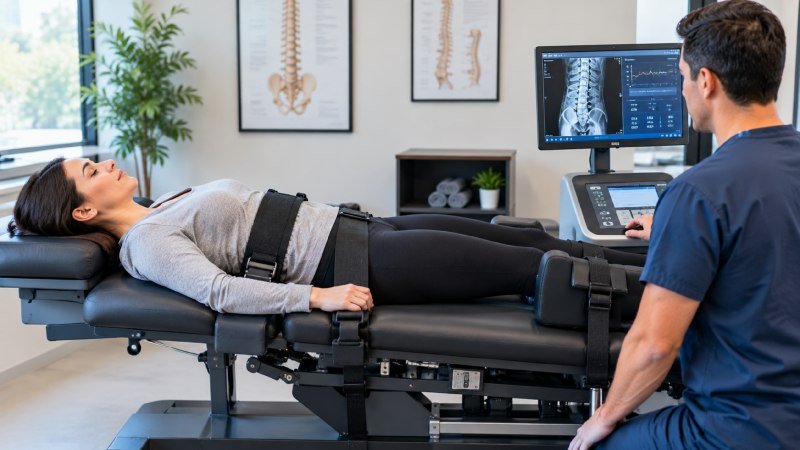
Spinal decompression uses a motorized table to gently stretch the spine, creating negative pressure within the discs. That negative pressure allows bulging or herniated disc material to retract, taking pressure off compressed nerves. The treatment also promotes the flow of water, oxygen, and nutrients into the disc, which supports the body’s natural healing process.
This is not the same as inversion therapy or hanging upside down. Clinical spinal decompression is computer-controlled, targeting specific vertebral segments based on the patient’s imaging and symptoms. Each session typically lasts 20 to 35 minutes, and most protocols run 12 to 20 sessions over four to six weeks.
Who Benefits Most From Decompression
The patients who respond best to spinal decompression tend to share a few characteristics. They have disc-related pain (bulges, herniations, or degenerative disc disease) rather than pain from fractures, tumors, or advanced spinal stenosis. They have not responded adequately to conservative care alone (stretching, exercise, medication) but are not yet at the point where surgery is clearly indicated.
Age is less of a factor than overall spinal health. A 65-year-old with a single-level disc herniation and otherwise good spinal integrity may respond better than a 40-year-old with multi-level degeneration and instability. The determining factor is whether the spine can tolerate and respond to the distraction forces the table applies.
What the Research Shows
Published studies on non-surgical spinal decompression show promising outcomes for specific conditions. A clinical study in the Journal of Neurological Research found that 86 percent of patients with ruptured intervertebral discs reported immediate resolution of symptoms or an eventual absence of symptoms after completing decompression protocols. Pain reduction and improved function scores have been documented across multiple trials, though the research also emphasizes that patient selection matters significantly.
The therapy works best as part of a comprehensive corrective care approach rather than as a standalone treatment. When combined with targeted exercises, postural correction, and lifestyle modification, the structural changes achieved through decompression have a better chance of holding long-term.
How to Evaluate a Decompression Provider
Not all decompression is equal. The quality of the equipment, the specificity of the treatment protocol, and the provider’s diagnostic process all influence outcomes. A thorough provider will require imaging before beginning treatment, use that imaging to program the table for your specific disc levels, and track objective progress markers throughout the course of care.
Look for a provider who explains what your imaging shows, what the expected timeline looks like, and what criteria they use to determine whether the treatment is working. Vague promises of pain relief without a clear diagnostic basis should raise a flag.
For residents of the North Shore and Merrimack Valley area of Massachusetts, clinics offering spinal decompression in Salisbury MA provide this level of diagnostic-first, corrective approach to disc-related back pain without the risks associated with surgical intervention.
When Decompression Is Not the Right Call
Spinal decompression is contraindicated in certain situations: spinal fractures, severe osteoporosis, spinal tumors, abdominal aortic aneurysm, metal hardware from prior spinal surgery, and pregnancy. A responsible provider will screen for these before accepting a patient into a decompression protocol.
It is also worth noting that decompression addresses structural disc problems. If your back pain stems from muscular strain, sacroiliac joint dysfunction, or facet joint inflammation without disc involvement, decompression may not be the most efficient path to relief. Accurate diagnosis before treatment selection is the difference between targeted care and expensive guesswork.
The Bottom Line
Spinal decompression therapy offers a legitimate non-surgical option for disc-related back and neck pain when applied to the right patient with the right protocol. The key is working with a provider who diagnoses first, treats based on objective findings, and measures progress along the way. If you have been told you need surgery for a disc problem but want to explore alternatives, decompression deserves a serious look.


