
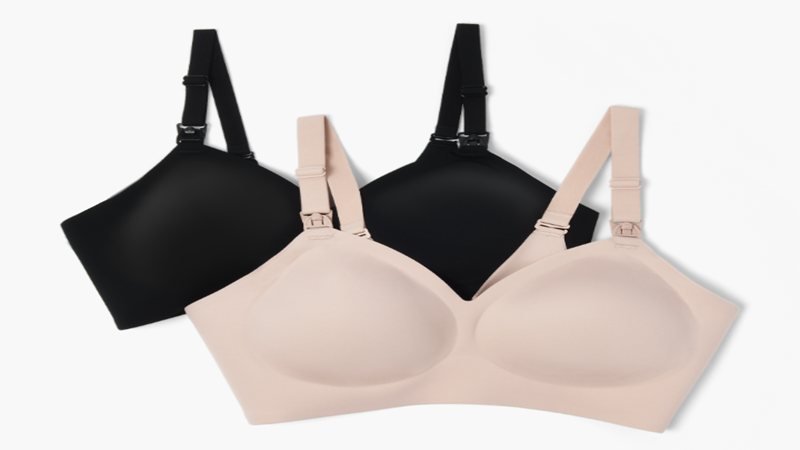
How to Choose the Most Comfortable Seamless Nursing Bra
The weeks after bringing a new baby home are filled with joy, exhaustion, and a body that feels like it belongs to someone else. Your breasts are fuller, more sensitive, and constantly changing — and the last thing you need is a bra that digs in, irritates, or makes middle-of-the-night feedings feel like a wrestling match. If you’ve ever struggled with an underwire poking at tender tissue or spent precious seconds fumbling with a clasp while your baby cries, you already know that a standard bra simply doesn’t cut it anymore.
That’s exactly where a seamless nursing bra changes the game. Designed specifically for the postpartum body, these bras strip away everything that causes discomfort — no wires, no irritating seams, no stiff panels — while adding the one thing you need most: effortless nursing access. The result is a bra you can wear from the first feeding of the morning to the last one at night, barely noticing it’s there.
This guide is here to cut through the overwhelming number of options and give you a clear, practical path to finding your perfect fit. You’ll learn what features truly matter, how to measure yourself accurately during this transitional phase, and how to get lasting value without overspending. Because when comfort is this closely tied to your daily wellbeing, making the right choice isn’t just about lingerie — it’s about taking care of yourself so you can take care of your baby.
Why a Seamless Nursing Bra is a Must-Have for New Moms
The postpartum body doesn’t follow a predictable schedule. Breast size fluctuates dramatically between feedings — swelling when milk comes in, softening after a full nursing session, then cycling through again. On top of that, skin becomes hypersensitive, nipples are tender, and for moms recovering from a C-section, even slight pressure near the abdominal area can be genuinely painful. A standard bra, built for a stable body shape, simply wasn’t designed for any of this.
Traditional bras with underwires are the most obvious offenders. Rigid wires sit directly on breast tissue, and when that tissue is engorged or inflamed, the pressure doesn’t just cause discomfort — it can contribute to blocked milk ducts. Seams that run across the cup add to the problem, creating friction lines against already-sensitive skin. Even lightly structured bras with molded foam cups can feel suffocating when your body is constantly changing shape throughout the day.
Seamless, wireless nursing bras sidestep all of these issues by design. Without rigid structures, there are no fixed pressure points — the bra simply moves with your body. The smooth, uninterrupted fabric surface eliminates friction against tender skin and is gentle enough for moms dealing with postpartum skin sensitivity or scar tissue. The stretch-based construction means the same bra accommodates the size difference between a full pre-feed and an emptied post-feed breast without digging or gaping.
Beyond physical comfort, there’s the practical dimension: discreet, one-handed nursing access. Whether you’re feeding in a café, at a family gathering, or in the dark at 3 a.m., a seamless nursing bra makes the process quiet and simple — exactly what both you and your baby need in those moments.
Key Features of the Perfect Comfortable Nursing Bra
Seamless & Wireless Construction
This is the foundation everything else builds on. Without underwires, there are no rigid structures pressing into engorged breast tissue or sitting uncomfortably against healing skin. Without seams running across cups or straps, there’s nothing to create friction lines, chafe, or leave marks after a full day of wear. The practical bonus: that clean, uninterrupted surface also disappears under fitted tops and postpartum clothing, giving you a smooth silhouette without visible lines.
Soft, Breathable Fabrics
Material choice makes a bigger difference than most moms expect. Modal is a standout option — it’s derived from beechwood fibers and feels noticeably silkier against skin than standard cotton, while still breathing well. Microfiber blends offer excellent moisture-wicking properties, which matters when hormonal shifts and frequent feeding sessions lead to more perspiration than usual. Cotton blends remain a reliable choice for maximum breathability, especially for sleep bras or warmer climates. Whatever the fabric, look for a soft handfeel, not just in the cup but across the band and straps.
Easy-Access Nursing Clips
The clip mechanism is where function meets real-world motherhood. The gold standard is one-handed operation — you should be able to unclip the cup with a single thumb or finger while holding your baby with the other arm. Beyond that, the clip should re-fasten securely without fumbling, and the dropped cup should lie flat against your torso rather than bunching forward where it becomes an obstacle for your baby. Test this early: a poorly designed clip quickly becomes one of the most frustrating parts of an otherwise good bra.
Adaptive Support and Lightweight Feel
Support without weight is achievable through smart construction rather than bulk. Wide, soft underbands distribute pressure evenly across the ribcage instead of concentrating it at one point. Flexible lining inside the cup adds gentle shaping and a layer of coverage without the stuffiness of molded foam. The goal is a bra that holds things in place throughout an active day — caring for a newborn involves a lot of bending, lifting, and quick movement — without feeling like you’re wearing it at all.
Extended Sizing and Stretch
A nursing bra that fits perfectly at 7 a.m. but digs in by noon isn’t actually doing its job. Four-way stretch fabric accommodates the natural size fluctuation between a full pre-feed breast and a softened post-feed one. Extended sizing ranges — particularly in the cup — ensure that moms with larger busts aren’t stuck with bras that technically fit on paper but gape or provide inadequate coverage in practice. When reviewing sizing charts, prioritize brands that factor in both band and cup expansion, not just baseline measurements.
Your Step-by-Step Guide to Finding the Right Fit
Step 1: Know Your Correct Size (Postpartum)
Standard pre-pregnancy measurements are almost always outdated by the time you’re nursing, so start fresh. Measure your band size by wrapping a soft tape measure snugly around your ribcage, just beneath your breasts — round to the nearest whole number. For cup size, measure around the fullest part of your bust, ideally in the morning when you’re most engorged, since that’s the size your bra needs to accommodate at its peak. The difference between these two numbers determines your cup size. Keep in mind that nursing sizes often run differently across brands, so treat the measurement as a starting point rather than a fixed answer.
Step 2: Prioritize Your Top Needs
Not every nursing bra serves the same purpose, and trying to find one that does everything perfectly leads to disappointment. Spend a moment identifying your primary use case. If you’re returning to work or spending long days out, structured daytime support should be your focus. If you’re feeding through the night, a sleep-friendly bra with minimal hardware matters most. And if discretion under fitted clothing is the concern, a smooth silhouette takes priority. Narrowing your criteria before you shop keeps the options manageable and the decision clearer.
Step 3: Decode Product Descriptions & Reviews
Marketing language can be misleading, but certain terms carry real meaning. “Four-way stretch” indicates fabric that expands both horizontally and vertically — essential for accommodating size changes throughout the day. “Butter-soft” or “second-skin feel” usually signals modal or microfiber construction, which genuinely performs differently from standard cotton blends. When reading reviews, prioritize feedback from moms with a similar body type and nursing stage. Look specifically for comments about how the fit holds up after washing, whether the clips loosen over time, and how the bra performs during longer wear — not just initial try-on impressions.
Step 4: The “Try-On” Checklist
When you receive or try on a bra, work through this sequence before committing. First, check the band: it should sit horizontally around your ribcage without riding up or digging in, and you should be able to slide two fingers underneath comfortably. Next, assess the cups — no gaping at the top, no spillage at the sides, and no center gore floating away from your sternum. Test the clip mechanism one-handed, simulating an actual feeding position. Finally, do a practical movement check: bend forward, lift your arms overhead, and twist side to side. If anything shifts, digs, or gaps during normal movement, the fit isn’t right regardless of the size label.
Finding Quality and Value: Navigating Affordable Maternity Wear
Where to Shop Smart
You don’t need to visit a specialty boutique to find a well-made seamless nursing bra, but knowing where to look saves both time and money. Dedicated maternity retailers — whether in-store or online — tend to offer the widest size ranges and the most nursing-specific designs, and their staff often have product knowledge that generic retailers lack. Major e-commerce platforms are equally worth exploring, particularly brands that specialize in postpartum comfort and publish detailed sizing guides — Momcozy, for instance, has built its entire line around the specific needs of nursing moms, with clearly mapped sizing resources that take both band and cup fluctuation into account. One underutilized strategy: multi-packs. Buying two or three bras together almost always costs less per piece than purchasing individually, and having rotation stock reduces wear on each bra, extending their overall lifespan. End-of-season sales and new-parent discount programs are also worth timing your purchase around when possible.
Investment vs. Budget Pieces
Not every bra in your rotation needs to be your best one. For daily wear — the bra you’ll put on at 7 a.m. and keep through a full day of feeding, movement, and everything else — spending more is justified. Better construction, higher-quality fabric, and more durable clip mechanisms make a real difference when something is worn constantly. For sleep bras or backup pieces used less frequently, budget-friendly options perform perfectly well. A practical starting point: invest in two high-quality daytime bras and fill the rest of your rotation with affordable alternatives.
Care Tips to Extend Bra Life
Even the best nursing bra degrades quickly with rough handling. Machine wash on a cold, gentle cycle and always use a mesh lingerie bag — this protects both the fabric and the clip hardware from snagging or deforming. Skip the dryer entirely; heat breaks down elastic fibers faster than anything else, which is exactly what causes bands to lose their stretch and support over time. Air drying flat or on a hanger preserves shape and keeps the fabric feeling soft wash after wash. Rotate between at least two bras daily so neither one is stressed beyond recovery.
Comfort Is a Necessity, Not a Luxury
Comfort during the postpartum period isn’t a luxury — it’s a genuine necessity. Every feeding, every middle-of-the-night wakeup, every long afternoon at home demands that your body be supported rather than fighting against what you’re wearing. The right seamless nursing bra brings all of this together: soft, skin-friendly fabric that eliminates irritation, a wireless design that adapts to your constantly changing body, a fit that holds up from the first feeding to the last, and one-handed access that makes nursing feel natural rather than complicated.
Use this guide as your practical framework. Measure yourself fresh, identify what matters most to you right now — daytime support, sleep comfort, or seamless discretion under clothing — and apply the try-on checklist before committing to any bra. Invest where it counts and make smart choices everywhere else.
And remember: taking care of your own comfort is not separate from taking care of your baby. It’s part of it. When you feel physically supported and at ease, everything else — the feeding, the bonding, the recovery — becomes a little more manageable. You deserve that ease. Start there.


