
How to Improve Indoor Air Quality at Home
Why Indoor Air Quality Matters
Most of us spend the bulk of our day indoors — at home, at work, or at school — and that adds up to a lot of exposure to whatever happens to be floating around in the air. Cooking, cleaning products, combustion appliances, trapped moisture, pet dander, dust, and even outdoor pollution that seeps inside all play a part in shaping a living space’s air quality. Improving it is rarely about finding one perfect fix. More often, it takes a layered approach: cutting off pollution at the source, increasing ventilation, and using filtration tools such as an air purifier where it makes sense. Filtration can trap certain airborne particles, but it doesn’t replace the need for fresh air exchange, nor does it deal with the underlying cause of a pollutant. The U.S. Environmental Protection Agency frames source control, ventilation, and air cleaning as the three foundational strategies for improving indoor air quality, and that framework is a solid starting point for any household.
Understand the Main Sources of Indoor Air Pollution
Indoor pollutants generally fall into a handful of categories. Particulate pollutants include dust, smoke, pollen, pet dander, and particles kicked up during cooking. Gaseous pollutants come from sources like cleaning products, paints, furnishings, personal-care items, and fuel-burning appliances. Biological contaminants, such as mold spores and bacteria, tend to develop wherever excess moisture lingers. Some of this pollution starts indoors; the rest drifts in from outside through doors, windows, or ventilation systems.
Concentrations of these pollutants vary widely depending on the source, the size of the room, how well it’s ventilated, the weather, and how long people are exposed. Visible dust or a noticeable smell isn’t a reliable gauge of air quality, either — some of the most serious indoor hazards, including radon and carbon monoxide, can’t be detected by sight or smell at all. Because particles, gases, and biological contaminants behave so differently from one another, they also call for different control methods. That’s a big part of why no single device or habit can manage indoor air quality on its own.
Start With Source Control
Source control usually comes first, and it’s often the single most effective way to improve air quality. That means avoiding indoor smoking or vaping, choosing lower-emission products when it’s practical to do so, and following manufacturer instructions for anything that releases fumes. Paints, solvents, pesticides, and strong cleaning agents should be stored properly and used only with adequate ventilation. Fuel-burning appliances need regular upkeep, and vehicle exhaust should never be allowed to drift into living spaces — through an attached garage, for instance.
Moisture management matters just as much. Leaks should be repaired as soon as they’re found, and damp areas kept dry to head off mold growth before it starts. Running exhaust fans during and after showers, and using kitchen ventilation while cooking, helps keep moisture from building up in the first place.
Picture two households dealing with the same musty bathroom smell. One masks it with air fresheners and calls it done. The other tracks down a slow leak behind the shower wall, fixes it, and starts running the exhaust fan consistently. The first home’s problem lingers and probably gets worse over time; the second one actually resolves it. It’s a simple illustration of why eliminating a source beats covering up its symptoms every time.
Improve Ventilation Safely
Opening windows and doors can dilute indoor pollutants when outdoor conditions cooperate, but ventilation depends on outdoor air quality — windows should stay shut during wildfire smoke or high-pollution days. When conditions are safe, cross-ventilation, opening up spaces on opposite sides of a room, can noticeably improve airflow.
Kitchen and bathroom exhaust fans pull moisture and pollutants out right where they originate, and they should vent outdoors rather than simply recirculating the same indoor air. Cleaning these fans regularly keeps them working as intended.
Mechanical HVAC systems also play a role in circulation and filtration, but they need to be properly sized, operated, and maintained. Following manufacturer guidance on filter replacement matters, since swapping in a higher-resistance filter without checking system compatibility can choke airflow or strain the equipment. Recognized guidance, such as applicable ASHRAE ventilation standards, offers further direction on minimum ventilation rates and system upkeep.
Use Filtration as a Supplement
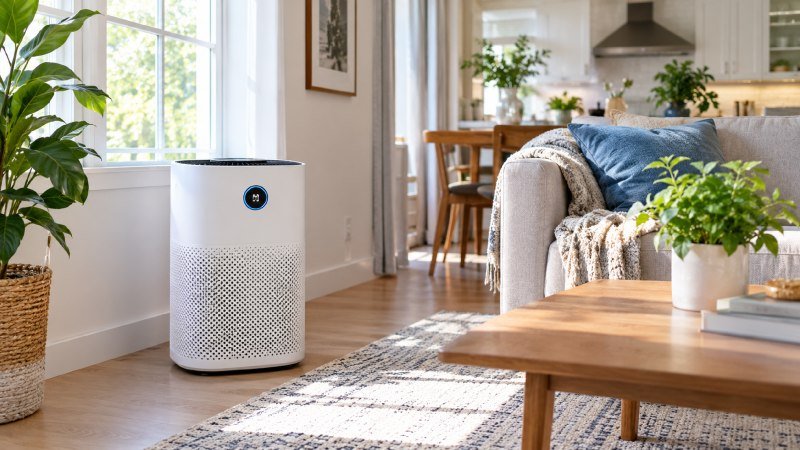
Filtration can cut down on certain airborne particles, but it’s no universal fix. Particle filtration and odor- or gas-focused technologies serve different purposes, and filtration supplements rather than replaces other measures like source control and ventilation. It won’t correct excess moisture, and it’s no substitute for fresh outdoor air.
When shopping for filtration equipment, compare verifiable specifications — room coverage, clean-air delivery rate, filter type, noise level, energy use — rather than leaning on vague marketing claims. Place portable units where people actually spend their time, keep air inlets clear, and replace filters according to manufacturer instructions. Be wary of claims involving ozone or other by-products, and look for independently backed safety information. Reasonable claims tend to use language like “may reduce” or “can help remove,” rather than promising complete pollutant removal.
Build a Room-by-Room Indoor Air Quality Routine
- Kitchen: Use the range hood while cooking and clean grease buildup regularly.
- Bathroom: Run exhaust fans during showers and address recurring condensation.
- Bedroom: Reduce dust reservoirs and wash bedding regularly.
- Living areas: Maintain filters and limit indoor smoke.
- Basement/utility areas: Check for dampness, leaks, and radon-testing needs.
Quick Indoor Air Checklist:
- Fix leaks and dry damp areas promptly.
- Run kitchen and bathroom exhaust fans.
- Replace HVAC and filtration filters on schedule.
- Avoid indoor smoking or vaping.
- Open windows only when outdoor air quality is good.
Common Mistakes to Avoid
Plenty of households treat air fresheners as though they remove pollution, when really they just mask odors. Others fling windows open on autopilot, even on poor-air-quality days, or run a filtration device for months without ever maintaining it. Installing a high-efficiency filter without checking HVAC compatibility can throttle airflow. Ignoring moisture, leaks, or combustion equipment simply because there’s no noticeable smell is another common slip-up, as is leaning on a single device instead of dealing with the actual source.
A Practical Decision Framework
- Identify the pollutant or symptom — smoke, dust, moisture, odor, or irritation.
- Reduce or remove the likely source.
- Improve ventilation when outdoor conditions are safe.
- Add filtration if airborne particles remain a concern.
- Monitor results and seek a professional assessment for persistent or hazardous conditions, such as suspected mold, radon, or combustion issues.
Key takeaway: Source control, ventilation, and filtration work best as a combined strategy, not as isolated fixes.
Creating a Healthier Indoor Environment
Improving indoor air quality is rarely about one purchase or one habit; it’s a layered process. Start by pinpointing the most obvious pollutant source in your home, address moisture and emissions, ventilate when it’s safe to do so, keep HVAC systems properly maintained, and bring in filtration where it genuinely adds value. Make one measurable change, see how it plays out, and adjust from there. Reliable, household-specific information and consistent maintenance will always matter more than any single product’s marketing claims.


