
How Online Booking Lowers the Anxiety of Seeing a New Doctor
Meeting a new doctor for the first time carries a weight that most people rarely admit out loud. There is the discomfort of describing personal symptoms to a stranger, the worry about being judged, and the quiet fear that something serious will be discovered. Long before the appointment itself, however, another layer of stress begins: the process of finding the right physician and securing a time slot. That first step often shapes how a patient feels about everything that follows.
For decades, arranging care meant picking up the phone during business hours, waiting through hold music, and explaining an intimate health concern to a receptionist who may or may not have sounded interested. Many people delayed that call for weeks. Some never made it at all. Research into healthcare avoidance has repeatedly shown that friction in access, not lack of concern about health, is one of the strongest predictors of skipped care.
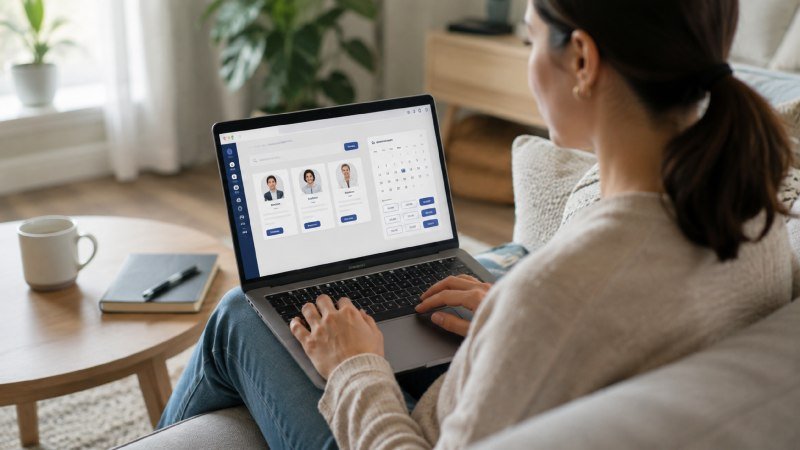
Digital scheduling has changed that opening moment. When a patient can browse verified provider profiles, filter by insurance and specialty, and confirm a visit through Vosita without speaking to anyone, the psychological barrier drops sharply. The decision no longer requires courage on demand. It only requires a few minutes and a screen.
The Hidden Stress of the First Phone Call
Anxiety around new medical care is rarely about the medicine itself. It is about uncertainty. Who is this doctor? Will they listen? What happens if I explain my symptoms badly?
A phone call amplifies every one of those questions. The patient has no time to prepare, no ability to review information, and no way to withdraw gracefully if the conversation goes poorly. They are asked to summarize a personal problem instantly, often while sitting in an office cubicle or a parked car.
Online scheduling removes that pressure entirely. The patient reads at their own pace, closes the tab if they change their mind, and returns later without embarrassment. Control is restored to the person who needs it most.
Information Before Commitment
One of the most reassuring aspects of digital booking is transparency. Before agreeing to anything, a patient can usually see:
- The physician’s credentials, training, and years in practice
- Languages spoken in the office
- Accepted insurance networks
- Office location, parking notes, and accessibility details
- Ratings and written feedback from previous patients
Each of these details answers a question that would otherwise linger in the back of the mind. Anxiety thrives on unknowns, and every unknown that gets resolved in advance reduces the emotional load of the visit.
Consider a patient who speaks Spanish more comfortably than English. In the traditional model, they might not learn whether the practice can accommodate them until they are already in the waiting room. Online, that concern is settled in seconds.
Scheduling on the Patient’s Own Terms
Traditional office hours create an awkward mismatch. The exact window in which a clinic answers calls is usually the same window in which working adults are least free to make them. Parents, hourly employees, and caregivers routinely lose the opportunity simply because their day does not align with the front desk schedule.
Digital booking operates without that constraint. A person can arrange care at eleven at night, during a lunch break, or on a Sunday morning when they finally have a quiet moment to think about their health. Choosing a time this way also feels less rushed. Instead of accepting whatever the receptionist offers first, the patient scans the calendar and selects a slot that genuinely works, which reduces the low-level dread of rearranging work or childcare later.
Reducing the Fear of Judgment
Some health concerns carry stigma. Sexual health, mental health, substance use, weight, and reproductive care all fall into categories that patients frequently hesitate to discuss. Saying those words to an unfamiliar voice on the phone can feel exposing enough to stop the process entirely.
Typing a reason for the visit into a private field is a different experience. There is no tone of voice to interpret, no pause on the other end of the line, no sense of being evaluated before the appointment has even begun. For patients who have previously had dismissive or uncomfortable interactions with the medical system, that privacy can be the deciding factor between seeking help and staying silent.
Clinicians benefit as well. When the reason for a visit is captured accurately in advance, the physician walks in already oriented, and the patient is spared the discomfort of repeating a difficult explanation three separate times.
Confirmation as Reassurance
Anxiety often resurfaces in the days between booking and the visit itself. Did the appointment actually get recorded? Was the date correct? Is the address the one downtown or the branch near the highway?
Automated confirmations and reminders answer those questions before they grow. A message in the inbox serves as proof that the arrangement exists. Reminder notifications a day or two ahead give patients time to prepare questions, arrange transport, or gather previous test results. Rather than arriving flustered, they arrive ready.
Preparation itself is calming. Patients who write down their concerns beforehand tend to report feeling more heard during the consultation, largely because they remember to mention the things that mattered to them.
Easier to Change Course
A surprisingly large source of stress is the fear of being trapped. Once an appointment has been made through a phone call, cancelling requires another phone call, sometimes an apology, and occasionally an explanation.
Digital rescheduling removes that social friction. If a conflict arises, the patient adjusts the booking in a moment. Knowing that an exit exists makes the initial commitment feel lighter, and paradoxically, patients who can easily reschedule are less likely to abandon care altogether. They shift the appointment rather than dropping it.
Practices see the effect in their no show rates. Empty chairs are expensive, and reminder driven rescheduling recovers slots that would otherwise be lost.
Building Trust Before the Door Opens
Trust between patient and physician usually begins forming long before the examination. It begins with the impression created by the practice itself. A clear, well organized booking experience signals that the office is competent and respectful of patient time. A confusing one suggests the opposite.
When someone has already read a doctor’s background, seen their photograph, understood what the visit will cost, and received a courteous confirmation, they walk in with a sense of familiarity. The physician is no longer entirely a stranger. That small shift changes the tone of the first few minutes, and those first few minutes often determine whether a patient speaks openly or holds back.
What Patients Can Do to Make the Process Even Calmer
A few practical habits amplify the benefits of digital scheduling:
- Read the provider profile fully rather than booking the earliest available name.
- Confirm insurance details in advance to avoid billing surprises that create their own anxiety.
- Use the notes field honestly, even briefly, so the visit starts from an accurate place.
- Save the confirmation message and set a personal reminder to prepare questions the night before.
- Arrive slightly early to allow time for paperwork without rushing.
None of these steps requires special knowledge, yet together they turn an intimidating appointment into a manageable one.
A Quieter Path to Care
The value of online booking is not only convenience. It is the removal of a series of small psychological hurdles that, stacked together, keep people away from medical attention they need. Every avoided phone call, every question answered in advance, and every option to reschedule without explanation lowers the cost of seeking help.
Health outcomes improve when patients show up. Making the act of showing up feel less daunting is, in its own quiet way, a form of care.