
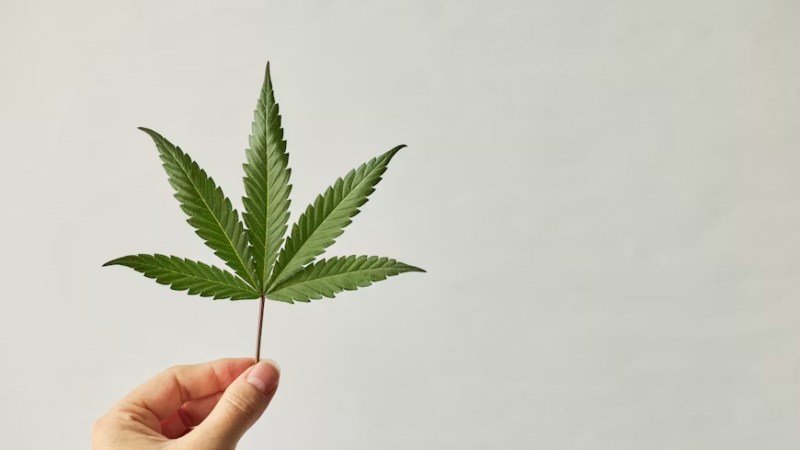
Other Words for Weed: A Complete Guide to Slang Names and Street Terms for Cannabis
Language and cannabis have a long, tangled history. Few plants have accumulated as many nicknames, code words, and cultural aliases as marijuana and the list has only grown as legalization has spread and cannabis has moved from the underground into the mainstream. Whether you’re curious about the origins of the terms you’ve heard, trying to decode a conversation, or simply exploring the linguistic culture around cannabis, this guide covers the most common other words for weed, where they came from, and what they reveal about the communities that created them.
Why Does Cannabis Have So Many Names?
The sheer number of slang names for weed is not accidental. It reflects centuries of cannabis moving across cultures, borders, and social strata each community imprinting its own language onto the plant. There are a few key forces that have driven this linguistic diversity.
First, there’s necessity. For much of the 20th century, cannabis was illegal in most Western countries, and users needed coded language to discuss it without attracting law enforcement attention. Slang served as a protective layer a shared vocabulary that outsiders couldn’t easily decode. The more aggressively authorities cracked down, the more creative the terminology became.
Second, there’s cultural identity. Cannabis has been deeply embedded in specific subcultures jazz musicians, beat poets, hippies, reggae artists, hip-hop communities and each brought its own vocabulary. Terms like “reefer” and “viper” (slang for a weed smoker) trace directly back to 1930s and 40s jazz culture in New Orleans and Harlem. “Ganja” arrived in the Caribbean with Indian indentured workers in the 19th century and was amplified globally by reggae music in the 1970s.
Third, there’s geography. The street names for marijuanas used in Los Angeles are not the same as those in London, Toronto, or Kingston, Jamaica. Regional dialects shape cannabis vocabulary just as they shape everyday speech, producing a patchwork of terms that vary dramatically by country, city, and even neighborhood.
| Did You Know?
The word ‘marijuana’ itself is believed to have Mexican-Spanish origins, though its exact etymology remains debated. It became widely adopted in the United States during the 1930s, largely through anti-cannabis campaigns that deliberately used the Spanish-sounding term to associate the plant with Mexican immigrants. |
The Most Common Other Words for Weed and Their Origins
Below is a reference guide to the most widely used slang names for weed across different eras and regions, along with the cultural context that gave rise to each one.
Cannabis Slang: Quick-Reference Guide
| Slang Term | Region of Origin | Background & Notes |
| Mary Jane | United States | 1940s–50s jazz slang; enduring mainstream use |
| Grass | USA / UK | 1950s–70s counterculture; references plant appearance |
| Herb / The Herb | Caribbean / Rastafari | Spiritual/religious framing; widely used in reggae culture |
| Reefer | USA | 1930s–40s; popularised by ‘Reefer Madness’ (1936) |
| Ganja | India / Caribbean | Sanskrit origin; adopted globally through reggae |
| Dope | North America | General slang; also used for other substances |
| Bud / Buds | North America | References the cannabis flower bud; modern and widespread |
| Chronic | USA (West Coast) | Popularised by Dr. Dre’s 1992 album; denotes high-potency |
| Trees | USA | Modern slang; refers to visual resemblance of the plant |
| Pot | North America | Possibly from ‘potiguaya’ (Spanish); mainstream usage since 1960s |
| Skunk | UK | References strong odour of high-THC strains |
| Loud | USA | Modern slang for pungent, high-quality cannabis |
Street Names for Marijuana by Era
One of the most interesting ways to look at street names for marijuanas is through a historical lens. The terminology has shifted dramatically across decades, and the language people use often signals which generation or subculture shaped their introduction to cannabis.
The 1930s–1950s: This era produced some of the most enduring and poetic slang. Terms like “reefer,” “muggles” (used by Louis Armstrong, who famously wrote a song of that name), “tea,” and “gauge” circulated in jazz circles. These terms were deliberately obscure jazz musicians needed language their managers, venue owners, and police officers wouldn’t recognize.
The 1960s–1970s: The counterculture generation brought in “grass,” “pot,” “weed,” “Mary Jane,” and “herb.” The widespread adoption of “pot” during this era is often attributed to the Spanish word “potiguaya” a contraction of “potación de guaya,” a cannabis-infused wine. These terms crossed into mainstream media and became the most widely understood shorthand for the plant.
The 1980s–1990s: Hip-hop culture introduced a new wave of slang that spread globally through music. “Chronic,” popularized by Dr. Dre’s landmark 1992 album, became synonymous with high-potency cannabis on the West Coast. “Blunt” (cannabis rolled in a cigar wrap), “L” (a blunt or joint), and “sess” entered the vocabulary through New York and East Coast rap scenes.
The 2000s–Present: The modern era is characterized by extreme fragmentation. Social media has accelerated the creation and spread of new terms “loud,” “gas,” “fire,” “sticky,” “dank” most of which describe quality rather than the plant itself. Simultaneously, the legalization movement has brought clinical and botanical language (“cannabis flower,” “cultivar,” “terpenes”) into everyday conversation alongside street slang.
| Language Shift
As cannabis legalization has expanded across the United States, Canada, and parts of Europe, many dispensaries and cannabis brands have deliberately moved away from street slang toward botanical and professional terminology a sign of an industry trying to normalize and destigmatize the plant. |
Regional Variations: How Location Shapes the Language
Perhaps the most fascinating aspect of other words for weed is how sharply they vary by geography. What you call cannabis often says as much about where you grew up as it does about the substance itself.
- United Kingdom: “Skunk” is the dominant term for high-potency cannabis, named for its distinctive odour. “Draw,” “puff,” “spliff” (specifically a tobacco-cannabis mix), and “green” are also widely used across England, Scotland, and Wales.
- Canada: Canadian slang leans toward American terms like “bud” and “weed,” but also includes regional expressions such as “BC bud” a reference to British Columbia’s long-standing reputation as a premium cannabis-producing region.
- Caribbean / Jamaica: “Ganja” dominates, deeply embedded in Rastafari spiritual practice. “Collie weed,” “kaya” (also the title of a Bob Marley album), and “lamb’s bread” are culturally significant regional terms.
- Australia: Australians commonly use “choof,” “mull,” “cone,” and “durry” (though the latter primarily refers to cigarettes). “Bud” and “green” have also become standard through American cultural influence.
- India / South Asia: “Ganja” and “charas” (hand-pressed hashish) are the primary terms, rooted in centuries-old Sanskrit and Ayurvedic traditions. “Bhang” refers specifically to a preparation of cannabis leaves used in religious and festival contexts.
Why Understanding Cannabis Slang Still Matters
In an era when cannabis is legal in many jurisdictions and sold in licensed dispensaries, it’s worth asking: do slang names for weed still serve a purpose? The answer is yes but the purpose has evolved.
Slang is no longer primarily about concealment. Today, it functions as cultural currency a way of signaling membership in a community, familiarity with cannabis culture, or connection to a particular generation or genre of music. When someone uses the word “chronic” versus “flower” versus “ganja,” they’re communicating not just what they’re talking about, but who they are and where they come from.
Understanding street names for marijuanas is also practically useful for parents wanting to understand what their teenagers are discussing, for journalists and researchers studying cannabis culture, for medical professionals communicating with patients across different backgrounds, and for anyone working in harm reduction or public health contexts where meeting people in their own language matters.
| Quick Note
Cannabis slang continues to evolve rapidly. New terms emerge regularly through social media, music, and regional communities. Any list of slang is a snapshot in time rather than a permanent record the language will keep changing as the culture does. |
Final Thoughts
The vocabulary surrounding cannabis is one of the most linguistically rich in any subculture. The other words for weed that exist today are the accumulated product of jazz musicians, counterculture movements, reggae artists, hip-hop communities, regional dialects, immigrant cultures, and now, a rapidly growing legal industry trying to forge its own professional language.
From “reefer” to “loud,” from “ganja” to “bud,” the breadth of slang names for weed tells a story about how cannabis has moved through societies carried by music, shaped by law enforcement pressure, and reinvented by each generation that encountered it. The street names for marijuanas in use today are not random: they are a living archive of the communities that have grown, used, traded, and celebrated this plant for centuries.
Whether you’re a curious newcomer or a longtime enthusiast, understanding the language around cannabis is a doorway into its rich and often surprising cultural history.


