
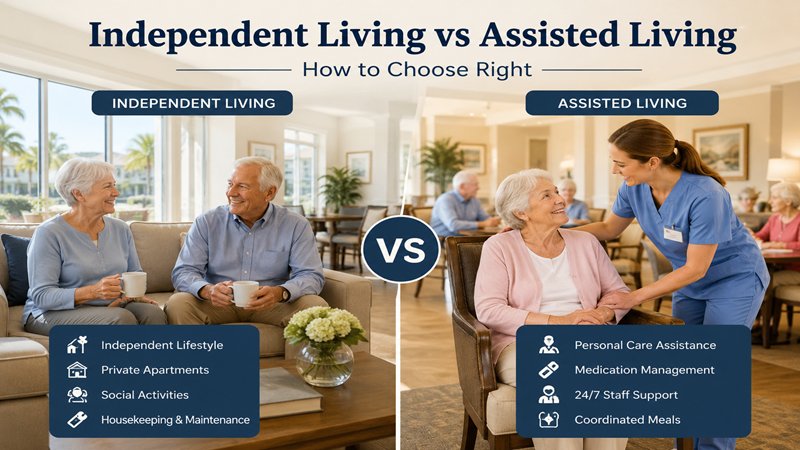
Independent Living vs Assisted Living: How to Choose Right
Choosing between independent living vs assisted living is one of the most common questions families face when researching senior housing, and it’s also one of the most misunderstood. The two options sound similar but serve very different needs, and picking the wrong one can mean either too little support or more restriction than necessary. This guide breaks down the real differences and walks through how to choose a senior living community that actually fits.
If you’re already exploring options, you can tour Seaside Hallandale Beach to see both independent and assisted living settings firsthand before making a decision.
What Independent Living Actually Means
Independent living is designed for seniors who are largely self-sufficient but want to simplify daily life. Residents typically live in private apartments or suites, manage their own schedules, and handle most personal care tasks themselves. What changes is the removal of burdens like home maintenance, cooking every meal, and long-term isolation.
Most independent living communities offer:
- Private apartments with full or partial kitchens
- Housekeeping and maintenance services
- Group dining options and social activities
- Transportation for errands and appointments
- Emergency call systems, without daily hands-on care
This setting works well for seniors who don’t need medical support but want built-in community and fewer daily responsibilities.
What Assisted Living Actually Means
Assisted living sits a step further along the spectrum. It’s built for seniors who need regular help with daily activities, things like bathing, dressing, medication management, or mobility, while still maintaining as much independence as possible.
Typical assisted living services include:
- Assistance with bathing, dressing, and grooming
- Medication management and reminders
- 24-hour staff availability
- Coordinated meals with dietary accommodations
- Higher levels of personal care support than independent living
The core difference in independent living vs assisted living comes down to how much hands-on daily support is actually needed, not simply age or general preference.
Understanding the Levels of Care in Senior Living
One of the most confusing parts of this decision is that senior housing isn’t a single category. Understanding the levels of care in senior living helps families see where their loved one currently fits, and where they might fit in the future.
A general spectrum looks like this:
- Independent living – minimal to no daily assistance needed
- Assisted living – regular help with daily tasks, but not full-time medical care
- Memory care – specialized support for dementia or significant cognitive decline
- Skilled nursing – full-time medical care and supervision
Many communities, including boutique options like Seaside, allow residents to move between independent and assisted living as needs change, without requiring a disruptive move to an entirely new facility later.
Signs a Senior Needs More Support Than Independent Living Offers
Recognizing signs a senior needs more support isn’t always obvious, especially from a distance. Families often notice these gradually rather than all at once.
Watch for:
- Missed medications or confusion about dosages
- Noticeable weight loss or an empty refrigerator
- Difficulty with bathing, dressing, or personal hygiene
- Frequent falls or new mobility challenges
- Increased confusion or memory lapses
- Withdrawal from previously enjoyed social activities
If several of these appear together, it’s often a sign that independent living alone may no longer provide enough support, and assisted living is worth exploring seriously.
How to Choose a Senior Living Community
Once you understand the general difference between independent living vs assisted living, the next step is comparing actual communities. Here’s how to choose a senior living community without feeling overwhelmed by options.
Start with an honest needs assessment
Write down specific daily tasks your loved one currently manages well, and which ones have become difficult. This list becomes your baseline for comparing communities.
Involve your loved one in the process
Even if cognitive decline is a factor, involving them in tours and conversations, where possible, tends to reduce resistance and preserve their sense of control over the decision.
Compare more than price
Cost matters, but so does staff-to-resident ratio, meal quality, activity variety, and how included services align with actual needs versus what looks good in a brochure.
Ask about flexibility
Some communities require a full move if care needs increase. Others, like Seaside, offer both independent and assisted living options on the same property, allowing a smoother transition later if needed.
Questions to Ask When Touring a Senior Community
Having a clear list of questions to ask when touring a senior community makes it much easier to compare options fairly, rather than relying on first impressions alone.
Consider asking:
- What is included in the base monthly rate, and what costs extra?
- What is the staff-to-resident ratio, especially during evenings and weekends?
- How are medical emergencies handled, and how quickly?
- Can residents transition between independent and assisted living if needs change?
- What does a typical day of activities and dining actually look like?
- How does the community handle move-in transitions for new residents?
Bringing this same list to every community you tour makes side-by-side comparison far more accurate than relying on memory or general impressions afterward.
What This Looks Like at Seaside Hallandale Beach
At Seaside Hallandale Beach, both independent living and assisted living options exist within the same boutique community. Residents get their own well-appointed suite, chef-prepared meals, and daily social activities centered around a spacious open-air courtyard, with the level of personal support adjusted based on individual needs rather than forced into a single rigid category.
This kind of flexible setup often removes much of the anxiety families feel about “picking the wrong option,” since the community itself can adapt as needs evolve over time, rather than requiring a stressful move to a new facility down the road.
Comparing Costs Between the Two Options
Cost is often the first question families ask, and it’s a reasonable one. Generally, independent living costs less than assisted living, since it includes fewer hands-on services. But the comparison isn’t always straightforward, because pricing structures vary significantly between communities.
A few things to clarify before comparing numbers directly:
- Does the quoted price include meals, housekeeping, and activities, or are these billed separately?
- Are personal care services in assisted living charged as a flat rate or tiered based on need?
- Is there an additional charge if care needs increase over time?
- Are there move-in fees, community fees, or long-term contract requirements?
Because independent living vs assisted living pricing can differ so much by community and region, it’s worth requesting a full breakdown in writing rather than comparing headline numbers alone. A community that looks less expensive upfront may end up costing more once add-on services are included.
When Families Get Stuck Between the Two
It’s common for families to land somewhere in between, a parent who is mostly independent but struggles with one or two specific tasks, like medication management or bathing safely. In these cases, the decision often comes down to which setting offers more flexibility rather than which label technically fits best.
Some communities allow residents to start in independent living and add specific support services as needed, rather than requiring a full move to assisted living for just one or two areas of difficulty. Asking directly whether a community offers this kind of a la carte flexibility is one of the more useful questions to ask when touring a senior community, since it can prevent an unnecessary, disruptive move later.
Making the Final Decision
Choosing between independent living vs assisted living ultimately comes down to an honest look at daily needs, not just age or general assumptions about what “senior living” should look like. A senior who cooks, drives, and manages their own schedule may thrive in independent living for years. Another who struggles with medication, mobility, or daily hygiene may benefit far more from the structured support assisted living provides.
There’s no universally right answer, only the option that matches where your loved one actually is right now, with room to adjust as things change.
Frequently Asked Questions
Can someone move from independent living to assisted living later if needed?
Yes, and it’s common. Many communities, including those with both options on-site, make this transition smoother than starting the search over from scratch elsewhere.
Is assisted living the same as a nursing home?
No. Assisted living supports daily activities like bathing and medication management, while nursing homes provide full-time medical and skilled nursing care for more serious health conditions.
How do I know which option is right for my parent right now?
Start with an honest assessment of what they can and cannot manage safely on their own. If daily tasks like medication, hygiene, or mobility have become difficult, assisted living is likely the better fit. If they’re largely self-sufficient but want less daily burden and more community, independent living may be enough.
What if my parent refuses to consider either option?
Resistance is common and usually comes from fear of losing independence. Framing the conversation around what they gain, more social connection, less daily stress, rather than what they’re losing, often helps. Involving a doctor or trusted family member can also make the conversation easier.
Understanding independent living vs assisted living before you start touring communities makes the entire process less overwhelming, and gives your family a much clearer sense of what to actually look for once you start visiting in person.