
The Digital Smile Revolution: How Australian Dental Clinics Are Redefining Modern Dental Health
Dentistry is entering an era where the boundary between clinical science and digital innovation is becoming increasingly fluid. Across Australia, the familiar image of a dental practice is changing. The waiting room remains, the dental chair remains, and the importance of a skilled clinician remains—but behind these familiar elements lies a sophisticated digital ecosystem capable of changing how oral health is assessed, planned and delivered.
Modern dental clinics are increasingly embracing technologies that allow dentists to see the mouth with greater detail, analyse complex information and plan treatments with remarkable precision. Digital dentistry is therefore not simply about replacing traditional tools with electronic ones. It represents a broader shift towards more personalised, predictable and patient-centred care.
From Traditional Impressions to Digital Understanding
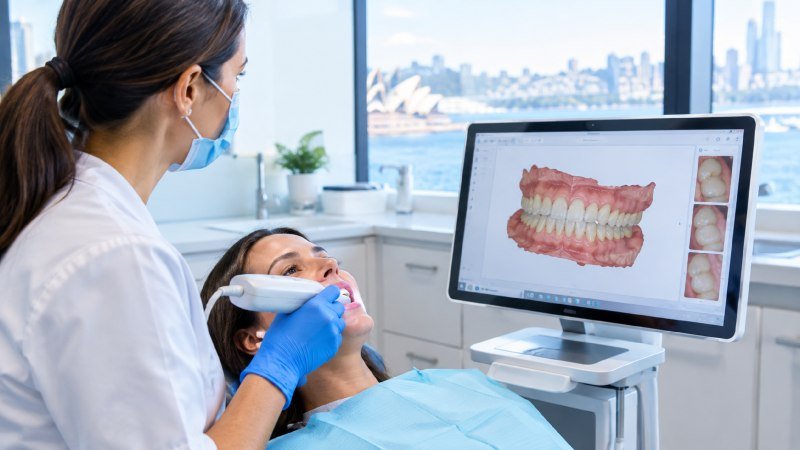
For generations, dental impressions were an essential part of many restorative and orthodontic treatments. Patients often had to bite into trays filled with impression material while clinicians waited for the material to set. Today, intraoral scanning is offering a different experience.
A small digital scanner can capture thousands of images of the teeth and surrounding oral structures, building a three-dimensional representation of the mouth. This digital model can then support the planning of crowns, bridges, aligners, implants and other treatments.
The significance goes beyond comfort. Digital impressions can be stored electronically, shared with dental laboratories and revisited when necessary. They can also become part of a broader digital treatment workflow, connecting different stages of care through a common visual reference.
Seeing What the Eye Cannot
Modern dental imaging has also transformed diagnosis. Technologies such as digital radiography and cone beam computed tomography (CBCT) can provide clinicians with detailed information about teeth, bone and anatomical structures.
CBCT is particularly valuable in selected implant and oral surgery cases because it can create three-dimensional images rather than relying solely on conventional two-dimensional views. This additional information can help clinicians evaluate bone dimensions, anatomical relationships and potential treatment considerations before a procedure begins.
Such technology does not eliminate clinical judgement. Instead, it gives dentists more information with which to exercise that judgement.
That distinction matters. Digital dentistry should not be understood as technology replacing the dentist. The most meaningful developments occur when advanced tools and human expertise work together.
Digital Planning and the Personal Smile
One of the most fascinating developments in modern dentistry is the increasing ability to visualise potential treatment outcomes before treatment is completed.
Digital Smile Design and related planning technologies can allow clinicians to examine proportions, tooth shape, facial relationships and aesthetic considerations within a broader context. Instead of considering individual teeth in isolation, dentists can increasingly approach smile design as part of the patient’s overall appearance and oral function.
This reflects an important evolution in dental philosophy. A healthy smile is not merely a collection of correctly positioned teeth. It is part of a living system involving chewing, speech, facial movement, periodontal health and personal confidence.
Digital planning can help bring these considerations together.
Artificial Intelligence and the Emerging Dental Workflow
Artificial intelligence is another technology gradually influencing dentistry. AI-assisted systems can analyse dental images and identify patterns that may warrant closer clinical examination. Depending on the technology and its intended use, such systems may support the detection or assessment of conditions such as dental caries and bone changes.
However, AI remains a support tool rather than an independent replacement for professional diagnosis. Dental conditions can be complicated, and clinical decisions require medical history, examination, imaging and professional judgement.
The future may therefore be less about automated dentistry and more about augmented dentistry—where technology helps clinicians process information while dentists remain responsible for interpreting it within the context of an individual patient.
Technology Can Also Improve the Patient Experience
The digital transformation is not confined to diagnosis and treatment planning. It can influence almost every stage of the patient journey.
Online booking systems, electronic records, digital treatment plans and automated appointment reminders can make communication more streamlined. Chairside digital displays may help patients understand proposed treatments visually, while computer-guided procedures can help clinicians translate carefully designed treatment plans into clinical action.
For patients, this can make dentistry feel less mysterious.
A visual explanation of a treatment can sometimes communicate an idea more effectively than several minutes of technical terminology. When people understand what is happening and why, they may feel more involved in decisions concerning their oral health.
The Human Element Remains Central
Despite the remarkable capabilities of modern technology, dentistry remains fundamentally human.
A scanner cannot understand a patient’s fears. An algorithm cannot replace empathy. A digital treatment plan cannot independently determine what matters most to someone considering a major dental procedure.
Technology is most valuable when it strengthens the relationship between patient and clinician rather than distancing them.
Australian dentistry’s digital evolution therefore represents more than a technological upgrade. It reflects a growing expectation that healthcare should be accurate, understandable, personalised and connected.
The most successful practices will not necessarily be those with the greatest number of gadgets. They will be those that understand how to integrate technology into thoughtful clinical care.
A New Definition of the Modern Smile
The digital smile revolution is ultimately changing the way dentistry thinks about possibility. Three-dimensional imaging, digital scanning, computer-assisted planning, CAD/CAM workflows and emerging AI applications are giving clinicians increasingly sophisticated ways to understand the mouth and plan treatment.
Yet the purpose of these innovations remains remarkably simple: healthier mouths, better-informed patients and treatment that is designed around individual needs.
Australia’s dental landscape is consequently moving towards a model in which precision and personalisation exist side by side. The future of oral healthcare will not be defined solely by machines or software, but by how intelligently those technologies are placed in the hands of skilled dental professionals.
In that future, transforming smiles with precision becomes more than a technological promise. It becomes an expression of what modern dentistry can achieve when advanced digital tools, clinical expertise and genuinely patient-centred care converge.