
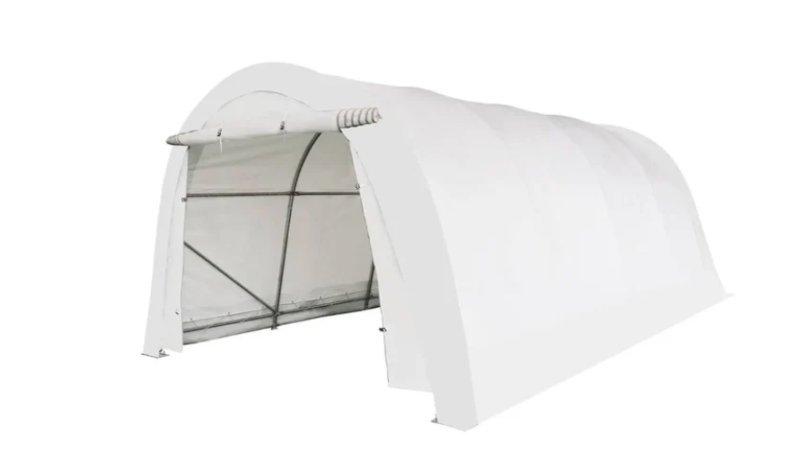
Across Canadian properties, vehicles parked outdoors face sun, rain, snow, and ice. Paint fades from ultraviolet exposure. Rubber seals crack from temperature extremes. A 12′ x 20′ car shelter provides covered space for vehicles without the cost of permanent garage construction. Canadian homeowners, rural property owners, and equipment managers use these shelters to protect cars, trucks, boats, and recreational vehicles from weather damage.
For many properties, a permanent garage is impractical due to cost, space, or zoning restrictions. A fabric and steel shelter offers an intermediate solution that can be installed on existing concrete pads or compacted gravel surfaces.
Common Applications and Design Features
Car shelters are commonly used for:
- Daily driver protection from sun and snow
- Classic car and collector vehicle storage
- Boat and personal watercraft shelter
- Recreational vehicle and camper protection
- Farm equipment and implement storage
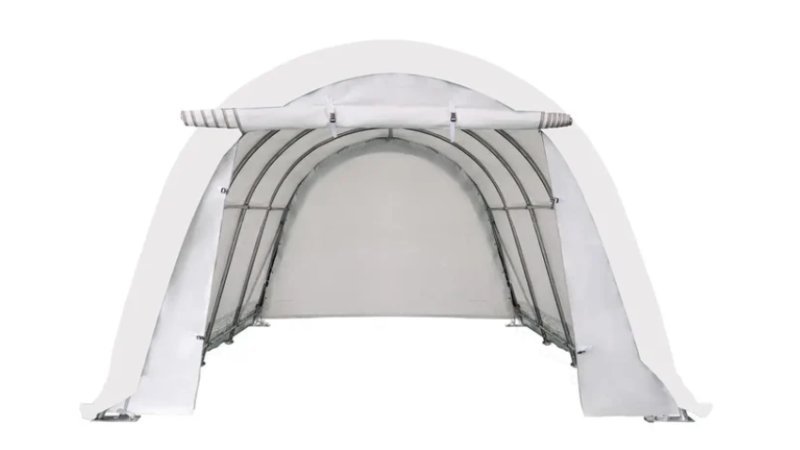
The shelter measures 12 feet by 20 feet, providing 240 square feet of covered space. The rounded roof design sheds snow and rain effectively. The galvanized steel frame resists corrosion from moisture and road salt. The 11 ounce polyethylene fabric cover is triple-layer ripstop construction, treated for fire resistance and ultraviolet stability. A fabric roll-up door on one end provides access for drive-through parking.
Protection from Sun, Snow, and Moisture
Ultraviolet radiation is a leading cause of vehicle exterior deterioration. Paint oxidizes, clear coat fails, and interior fabrics fade. A shelter with UV-stabilized fabric blocks most harmful rays while allowing light transmission. This protection preserves vehicle appearance and resale value.
Snow and ice cause other issues. Frozen doors and windows are inconvenient. Snow accumulation on vehicles adds weight and can damage wipers and trim. Parking under shelter eliminates snow clearing before morning commutes.
Key factors affecting shelter performance:
- Proper anchoring to concrete or ground
- Cover tension and condition
- Frame integrity and bolt tightness
- Snow load accumulation management
Ease of Assembly and Portability
The shelter is designed for DIY assembly. The galvanized steel frame connects with bolts. The fabric cover attaches over the frame and secures with straps. Two people can typically assemble the shelter in a day. Pre-drilled baseplates accept anchor bolts for securing to concrete slabs.
Unlike permanent garages, car shelters can be disassembled and relocated. This flexibility is valuable for renters or those planning to move. The shelter can also be stored during summer months if not needed.
Safety Practices and Maintenance Guidelines
Safe shelter use requires several key practices:
- Anchor securely to concrete or compacted ground
- Remove snow accumulation before exceeding design limits
- Check cover tension after wind storms
- Inspect frame bolts for tightness annually
- Roll up door when not in use to prevent wind damage
Maintenance includes washing the cover with mild soap and water, inspecting for tears, checking frame for rust, and lubricating zipper on the roll-up door. The cover should be replaced if significant tearing or UV degradation occurs.
Advantages and Limitations
Advantages of a car shelter include:
- 240 square feet of covered space
- 8 foot dome ceiling height
- Galvanized steel frame for corrosion resistance
- UV-stabilized and fire-retardant fabric
- Roll-up door for drive-through access
- No building permit required for temporary structure
- Portable and relocatable
Limitations to consider:
- Not for extreme snow loads without certification
- Fabric cover replacement needed after years
- Not insulated for heated storage
- Lower security than locked garage
- Cover may flap in high winds
Real-World Application Example
A Canadian homeowner in Ontario owned a classic car stored outside under a car cover. The cover trapped moisture, causing rust on the chrome trim. The homeowner installed a 12×20 car shelter on the existing asphalt driveway. The shelter kept snow and rain off the car while allowing airflow to prevent moisture buildup. The roll-up door allowed easy access for weekend drives. The homeowner reported no new rust after two winters.
Conclusion and Future Outlook
TMG Industrial Car shelters provide Canadian vehicle owners with affordable weather protection when permanent garages are not feasible. The combination of galvanized steel frame and UV-stabilized fabric offers durable protection for cars, trucks, boats, and recreational vehicles. As property values rise and garage space remains limited, demand for portable shelters will likely continue. Future designs may include thicker fabric for extended life, integrated lighting, and improved anchoring systems for higher wind resistance.
Vehicle owners should evaluate car shelters for any property lacking garage space. The 12 foot by 20 foot size and roll-up door make this shelter suitable for diverse Canadian vehicle protection applications.