
Stainless Steel Rolling Workbench: Mobile Tool Storage for Busy Shops
Across American automotive shops, industrial maintenance facilities, and home garages, workspace is often limited. Fixed workbenches cannot move to where the work is. A stainless steel rolling workbench combines a durable work surface with mobile tool storage that moves to the job. American mechanics, technicians, and hobbyists use these benches to bring tools and workspace directly to repair bays, improving productivity.
Common Applications and Design Features
Rolling workbenches are commonly used for:
- Automotive repair bay tool access
- Industrial maintenance mobile workspace
- Home garage flexible work area
- Assembly line support stations
- Job site mobile tool storage
Mobility and Workspace Flexibility
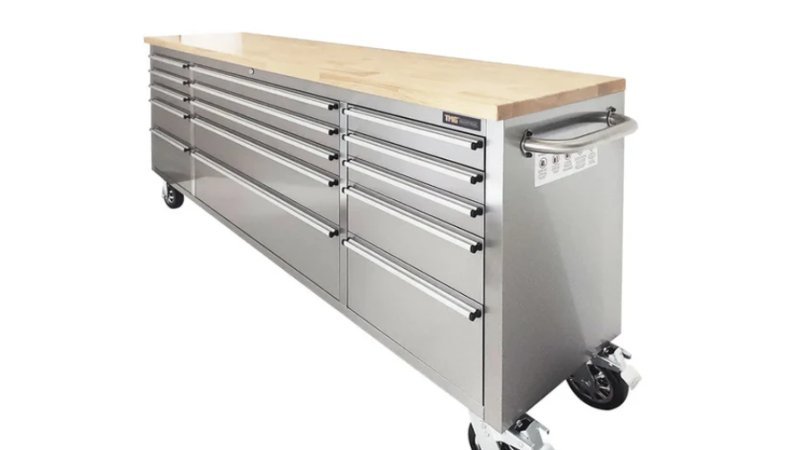
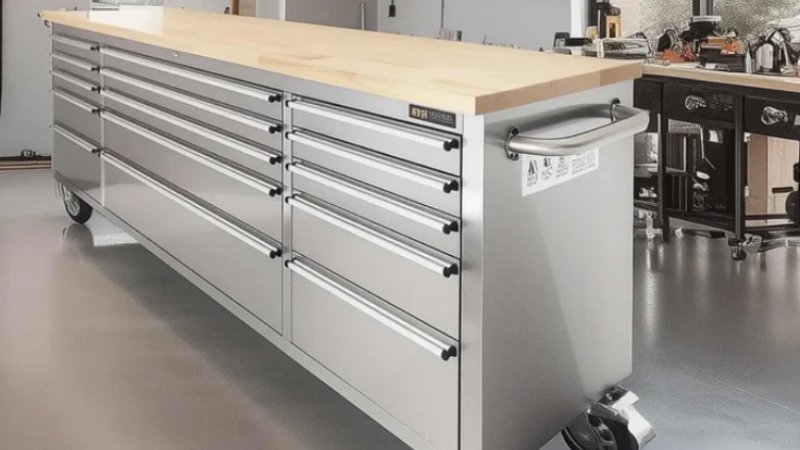
Fixed workbenches require technicians to walk back and forth to retrieve tools. A rolling bench moves to the vehicle or equipment being serviced. The tubular side handle allows one person to reposition the bench easily. Once in position, the locking wheels prevent movement during use.
This mobility is particularly valuable in shops where work bays handle different types of repairs. A technician can roll the bench to a bay, perform the work, then roll it back to a storage position. This flexibility maximizes limited shop floor space.
Tool Storage and Organization
The fifteen lockable drawers provide organized storage for hand tools, power tools, and supplies. Drawer capacities vary by size, with larger bottom drawers equipped with dual slides for heavy items. The central flat key locking mechanism secures all drawers with a single key, preventing unauthorized access after hours.
Pre-cut drawer liners protect tool finishes and prevent sliding. Drawer handles are rust-resistant, important in shops where oily or wet hands open drawers frequently. The organized drawer system reduces time spent searching for tools, improving repair efficiency.
Work Surface Durability and Cleanliness
The 1.5 inch rubberwood tabletop offers a durable work surface that resists impact from heavy parts. Unlike metal surfaces that can damage delicate components, rubberwood provides a softer work surface while still withstanding heavy use. The wood does not conduct electricity, making it suitable for electrical work.
The stainless steel body resists corrosion from shop chemicals and cleaning agents. The anti-fingerprint finish maintains a professional appearance despite frequent handling. The smooth surface wipes clean easily, important for shops where cleanliness matters to customers.
Safety Practices and Operational Guidelines
Safe workbench use requires several key practices:
- Lock casters before beginning work
- Close drawers before moving the bench
- Distribute heavy items evenly across the work surface
- Lock drawers at end of each shift
- Keep work surface clear of clutter
The bench should be positioned on a level floor before locking casters. The weight of tools in drawers provides stability, but the bench can tip if heavy items are placed on the edge of the work surface while drawers are open.
Advantages and Limitations
Advantages:
- 72 inch wide work surface
- 1.5 inch thick rubberwood tabletop
- 15 lockable drawers with dual slides on bottom drawers
- Anti-fingerprint stainless steel finish
- Four locking casters for mobility
- Tubular side handle for easy moving
- Central key locking mechanism
Limitations:
- Assembly required
- Heavy when fully loaded
- Not suitable for outdoor use
- Rubberwood requires periodic oiling
- Stainless steel can show scratches
Real-World Application Example
An American automotive repair shop in Texas had technicians sharing a fixed workbench at the back of the shop. Each trip to retrieve tools took 2 minutes. With 8 service bays and 6 technicians, wasted walking time exceeded 2 hours daily. The shop owner purchased rolling workbenches for each technician. Each bench held the technician’s daily tools and moved to the bay where they worked. Wasted walking time dropped to near zero, and the shop completed 2 additional repairs per day.
Conclusion and Future Outlook
Stainless steel rolling workbenches enable American technicians to bring tools and workspace directly to the job. The combination of a durable rubberwood top, mobile design, and lockable drawer storage makes these benches essential for busy repair shops.
As businesses place greater emphasis on improving workplace efficiency, the need for mobile workstations is expected to grow. Future models could feature built-in power outlets for charging cordless equipment, along with customizable drawer organizers to keep tools neatly arranged.Facility supervisors should consider investing in rolling workbenches in environments where technicians frequently lose time moving back and forth between their workstations and tool storage areas.The 72 inch width and 15 drawer capacity make this bench suitable for diverse American automotive and industrial applications.


