
At-Home Urine Drug Testing 101
What At-Home Urine Drug Tests Actually Are
Drug testing used to happen in one place: a clinic, a lab, or an HR office.
That changed once urine test strips became affordable and easy to buy without a prescription. Now, anyone can screen for THC or a whole panel of substances from a bathroom, in minutes, without breaking the bank.
Easy to use isn’t the same as self-explanatory. A lot of people buy their first test kit with almost no idea how the science behind it works, which one to pick, or how to read a line that’s a little too faint to call.
This quick guide walks through the basics: the technology inside the strip, which panel to choose, and what a confirmatory test actually confirms.
What At-Home Urine Drug Tests Actually Are
An at-home urine drug test is a small, single-use device (usually a strip, dip card, or cassette) designed to detect drug metabolites in urine. It’s the same core technology used in clinics and workplace screening programs, just packaged for personal use, rather than at a collection site.
The tech inside the strip: immunoassay, briefly explained
Nearly every at-home test relies on immunoassay technology.
The strip contains antibodies designed to bind to a specific drug metabolite. When urine passes through the strip, those antibodies react (or fail to react) with whatever’s present, producing a visible line. According to the National Institute on Drug Abuse, immunoassays are by far the most common method for detecting drugs in urine, working through a chemical reaction between an antibody and the target substance.
Sometimes those antibodies bind to a chemically similar compound instead, which is why cross-reactivity is a known (but fairly uncommon) source of false positives.
Immunoassay strips are screening tools, not diagnostic instruments. They flag whether a metabolite is present above a certain threshold. They don’t measure exact concentration, and in heavier users, they can’t tell recent use apart from metabolites still clearing out from weeks ago.
Who Actually Needs One
At-home urine tests show up in a wider range of situations than people assume:
- Preparing for a pre-employment or return-to-duty screening
- Monitoring a household member, often a teen or someone in recovery
- Personal peace of mind before a scheduled workplace test
- Confirming how long THC or another substance is likely to stay detectable
None of these require a medical reason. That’s part of why the category has grown so quickly.
The Main At-home Urine Test Types
Not every kit tests for the same thing, and picking the wrong panel is one of the most common mistakes buyers make.
- THC-specific tests. These screen for THC-COOH, the inactive metabolite that THC breaks down into. Most come with a cutoff of 50 ng/mL, matching the federal standard. However, 20 ng/mL and 100 ng/mL versions exist as a part of a 3-level test for people who want a more or less sensitive result.
- 5-panel tests. This is the closest at-home equivalent to a federal or DOT-style screen. It typically covers THC, cocaine, opiates, amphetamines, and PCP. The Substance Abuse and Mental Health Services Administration sets the cutoff levels and testing procedures that federal workplace programs follow, and most commercial 5-panel kits are built around that same framework.
- 7-panel tests. These add benzodiazepines and barbiturates to the standard five, which makes them a better fit for households monitoring a broader range of substances, including prescription medications that get misused.
How To Get Them
At-home urine tests are sold individually or in multi-packs, and quality varies a lot between brands. Consistency matters more than price here. A strip with a poorly calibrated cutoff wastes money AND it hands you a wrong result you might act on. Exploro’s THC and multi-panel urine tests are built to match the same cutoff standards used in professional screening, so results are comparable to what a lab or workplace test would show.
How To Use At-Home Urine Drug Tests Correctly
The strip does the chemistry, but the person holding it still has to follow a few basic steps:
- Use a clean, dry collection cup and a fresh urine sample, ideally first-morning urine for the highest concentration.
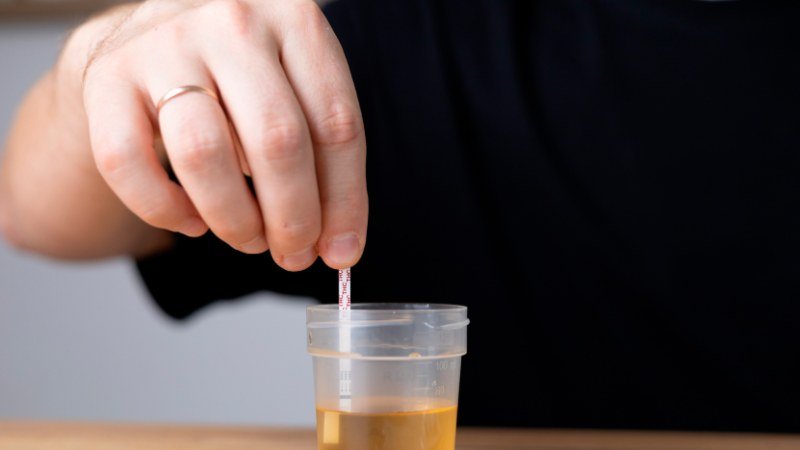
- Dip the strip to the marked line for the full time listed in the instructions, usually 10 to 15 seconds.
- Lay the strip flat and start a timer. Don’t read the result early or let it sit for far longer than instructed.
- Read the result within the labeled window, typically 5 minutes. Results read after that window aren’t reliable.
Skipping any of these steps is the most common reason people get a confusing or invalid result.
How To Read The Results
Every immunoassay strip works on the same basic logic:
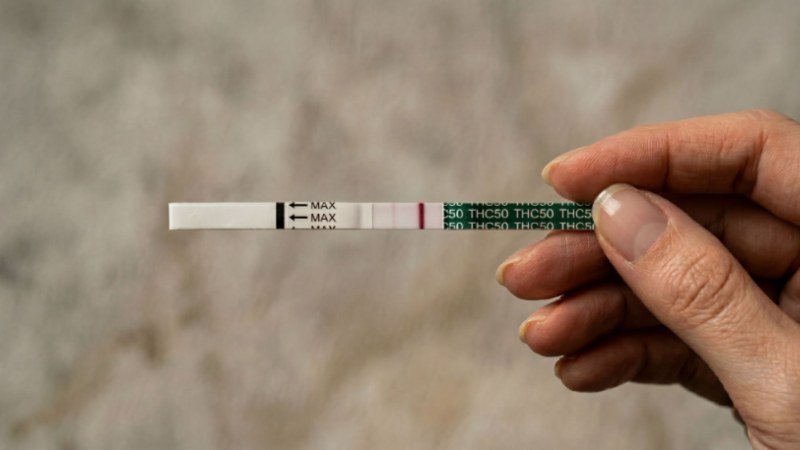
- Two lines (control and test line), even faint, means negative. The drug wasn’t detected above the cutoff
- One line (control only) means positive. Enough of the metabolite was present to trigger a reaction
- No control line at all means the test is invalid and needs to be repeated with a new strip
A faint test line still counts as negative, since the strip is designed to react only once the concentration passes the cutoff. If a result seems off, given someone’s actual usage, a confirmatory lab test using chromatography is the way to settle it, since that method doesn’t run into the cross-reactivity issue that immunoassays sometimes do.
False Positives: Medication and Food
A handful of common over-the-counter and prescription drugs can trigger a false positive on immunoassay strips, depending on the panel. NSAIDs like ibuprofen have been linked to false positives on some THC and barbiturate tests. Certain antidepressants and antihistamines can do the same on amphetamine panels. Even proton pump inhibitors like omeprazole show up occasionally as a false positive for THC on some strip brands.
Food is a smaller factor, but it’s not zero. Poppy seeds are the well-known one, and eating enough of them can push opiate results over the cutoff for a day or so. CBD products marketed as “THC-free” sometimes contain trace THC that a sensitive strip picks up, especially at the 20 ng/mL cutoff.
None of this means the test is broken. It means a positive result on its own isn’t proof of anything specific. If someone tests positive and there’s a plausible medication or food explanation, that’s exactly the situation a confirmatory lab test exists for, since chromatography doesn’t share the same blind spots.
Storage and Shelf Life
Test strips degrade. Heat, humidity, and expired antibody reagents can all produce unreliable readings, even when the collection and reading steps are done perfectly. Keep unopened kits in a cool, dry place, check the expiration date before testing, and avoid buying loose strips from unverified third-party sellers, since there’s no way to know how they were stored before you got them. If you really want to go deep into this topic, Exploro breaks down all angles of at-home drug testing across their educational material. They even have a THC detox masterclass (with Dr. Nusse, a certified medical & DOT examiner) for people who need direct guidance.
The Bottom Line
At-home urine drug testing runs on the same chemistry labs use.
The difference comes down to execution: pick the panel that actually matches what you’re trying to find out, follow the timing instructions closely, and give yourself peace of mind on time. All that in the comfort of your home, instead of a medical facility.


