
Homeopathy Software Free Trial: What to Know Before You Sign Up
Quick Comparison: Free Trials at a Glance
| Software | Trial Type | Length | What’s Unlocked |
| Similia | Free tier (permanent) + Pro trial | 14 days for Pro features | Several repertories free forever; AI transcription and premium repertories during Pro trial |
| RadarOpus | Full trial | Time-limited demo | Complete program, including Synthesis repertory |
| Complete Dynamics | Free Browser Edition | No time limit | Full Complete Repertory, read-only case tools |
| VithoulkasCompass | Free trial | 7 days | Full platform, including expert-system analysis |
Trial terms change from time to time — it’s worth confirming current details on each provider’s site before signing up.
Choosing homeopathy software from a features page alone is a bit like choosing shoes from a catalog. The specifications might all check out, but you won’t know how it actually feels until you’re using it on a real case. That’s exactly what a free trial is for, and it’s worth taking seriously before committing to a paid plan.
Why a Free Trial Matters More Than a Feature List
Repertorization — the process of matching symptoms to remedies — is a hands-on task. How quickly you can find the right rubric, how naturally the search understands your phrasing, and how easily you can move between repertories mid-case are all things a pricing page simply can’t communicate. Two platforms with an identical list of included repertories can feel completely different in daily use.
Workflow also varies enormously between practitioners. Someone working solo from a laptop has different needs than someone managing a busy clinic across multiple devices. A trial is really the only reliable way to find out which platform fits the way you actually work, rather than the way a marketing page describes an “ideal” workflow.
It’s also worth knowing upfront that not everything labeled as a trial works the same way. Some platforms offer a genuinely free tier that never expires, alongside a separate, time-limited trial of their premium features. Others offer a single trial window after which most functionality locks. Knowing which model you’re dealing with changes how you should approach testing it.
What to Actually Test During a Free Trial
A trial is only useful if you use it deliberately. A few things worth doing before your access window narrows or closes:
Search real symptoms, not generic ones. Pull a handful of symptoms from an actual or realistic case and see how quickly the software gets you to a relevant rubric. This tells you far more than searching a textbook example the software was clearly built to handle well.
Switch between repertories mid-case, if the platform supports it. Some tools make cross-referencing multiple repertories seamless; others require closing one and reopening another, which adds friction during a live consultation.
Check materia medica cross-referencing. Once you’ve narrowed down candidate remedies, see how easily you can pull up the full remedy picture without leaving your case notes.
Test it on your actual devices. Try the trial on the phone, tablet, or desktop you’d realistically use day to day, not just whichever device is closest when you sign up. A platform that feels smooth on a desktop can be frustrating on a phone, and vice versa.
Try AI features on a real spoken case, if the software includes them. Transcription and automatic rubric mapping tools are only useful if they handle the way people actually talk during a consultation, not just clean, typed input.
Look at how patient data is handled before entering anything real. Check for stated encryption and compliance claims, such as HIPAA or GDPR, before putting any actual patient information into a trial account — even temporary access should be treated with the same caution as a paid one.
What Free Trials Typically Include (and What They Don’t)
Most trials work by temporarily unlocking premium repertories or features that would otherwise sit behind a paid plan, such as the Complete Repertory, Murphy’s MetaRepertory, or AI-assisted case tools. Trial length varies: some run on a fixed number of days, others on a usage-credit system that expires once you’ve made a certain number of searches.
It’s worth distinguishing a true free-forever tier from a time-limited trial. Similia, for example, offers a handful of classical repertories permanently at no cost, with a separate 14-day trial specifically for its Pro-tier AI features and additional repertories. That’s a different arrangement than a platform where every feature disappears once the trial window closes, and it’s worth checking which model you’re actually signing up for.
Case management and cloud sync are sometimes included only during a trial period as an incentive, so it’s also worth checking whether saved cases and data remain accessible if you decide not to continue on a paid plan.
A Few Notable Free Trials Worth Knowing About
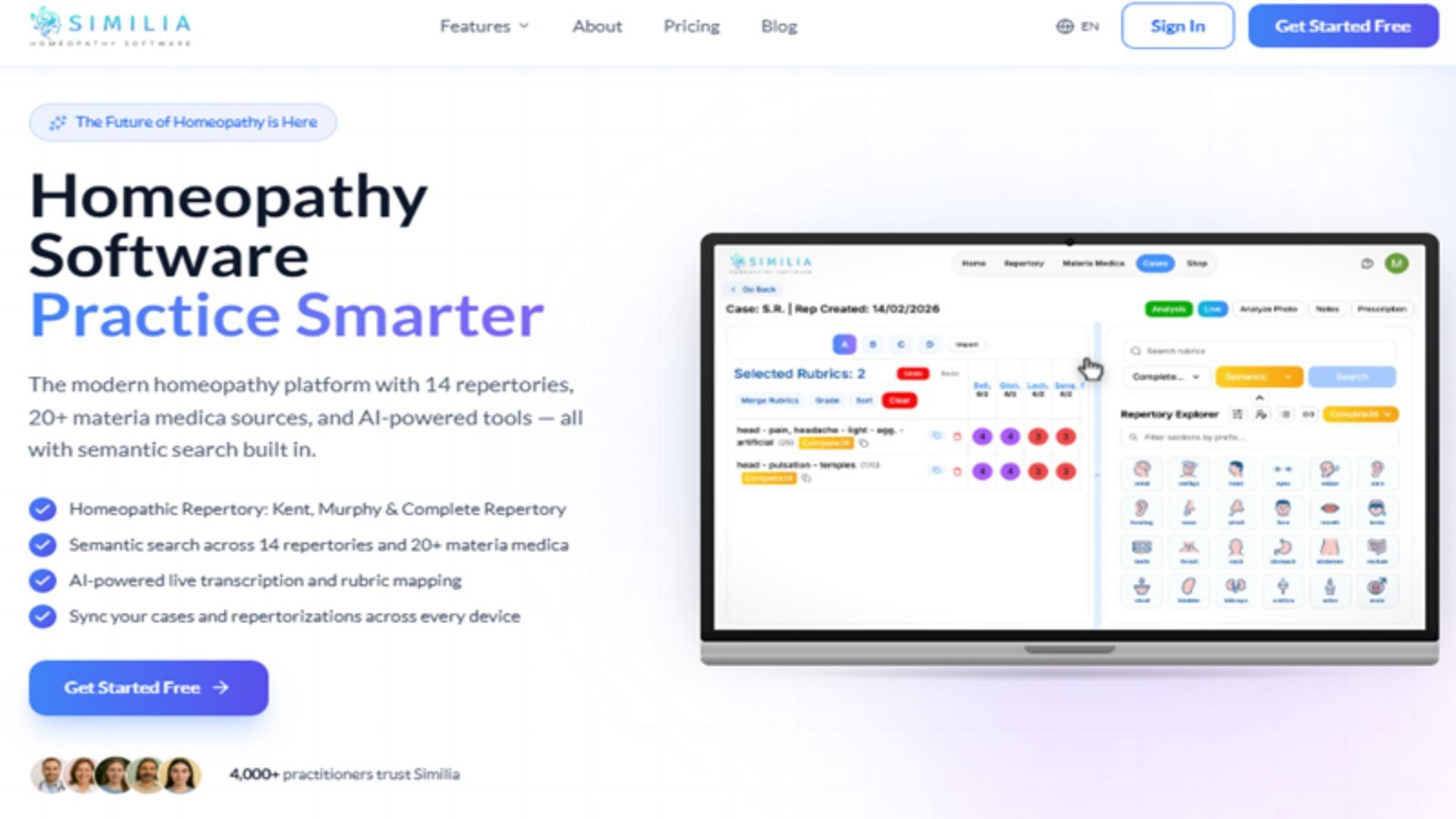
Similia offers a permanent free tier covering several classical repertories, plus a 14-day trial of its Pro plan, which adds semantic search, AI-assisted transcription, and additional premium repertories.
RadarOpus offers a full trial of its complete program, including the Synthesis repertory, before requiring a lifetime license purchase.
Complete Dynamics provides a free Browser Edition with full read access to the Complete Repertory and no time limit, alongside a paid Practitioner Edition for those who want case management tools.
VithoulkasCompass offers a 7-day free trial of its full platform, including the expert-system analysis built around the Vithoulkas method.
A Quick Note on Realistic Expectations
No trial, however generous, will fully replicate months of daily use. What it will do is surface the obvious dealbreakers early: clunky search, missing repertories you rely on, or a mobile experience that doesn’t hold up outside the office. It’s generally worth testing more than one platform’s trial before committing, since differences that seem minor on paper tend to show up quickly once you’re working through an actual case.
Conclusion
The best homeopathy software isn’t necessarily the one with the longest feature list — it’s the one that disappears into your workflow rather than fighting it. A free trial is the most reliable way to find that out before spending money on a license or subscription. For practitioners who’d rather start without a trial clock running out, Similia’s free tier is a reasonable place to begin, since the core repertories remain accessible for as long as you need them.