
How Different Therapy Settings Support Child Development
Children grow in many directions at once. When a child struggles with speech, social skills, sensory processing or behaviour, the setting where therapy happens can shape how quickly and how deeply progress takes hold. Different environments offer distinct advantages. Some are calm and clinical, others are lively and play based, and each one can be the right fit depending on a child’s needs, family life and the goals set by therapists and carers.
Home based support and family involvement
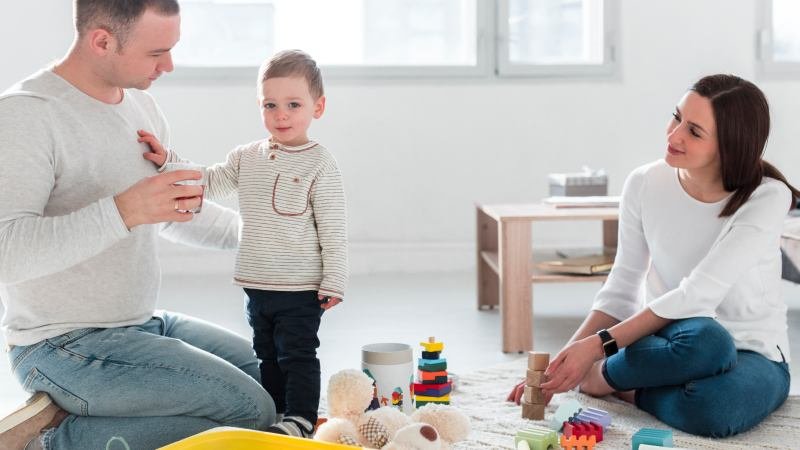
Therapy delivered at home brings learning into the place where a child feels safest. Parents and siblings become active partners rather than passive observers. Practitioners can coach caregivers in real time, showing how to turn everyday routines into learning moments. For example, mealtimes can become opportunities to practise turn taking and new words. The familiarity of home also reduces anxiety for many children which helps them engage more readily. When families feel confident, gains are more likely to be maintained between sessions and across years.
Clinic based programmes and structured approaches
Clinic settings provide structure and access to specialised equipment and trained teams. In a clinic, therapists can concentrate on targeted interventions without the distractions of home life. This is where many evidence based programmes are delivered, and where clinicians can measure progress with standardised tools. ABA clinics often operate in this space, offering intensive behaviour support and clear data tracking. For families who want a focused, measurable approach, clinics can be reassuring. They also make it easier for multiple professionals to collaborate in the same place, which can speed up assessment and planning.
School based therapy and natural learning
When therapy happens at school it is woven into a child’s daily routine with peers. Teachers and therapists can coordinate so that strategies used in therapy are reinforced in the classroom. This setting is particularly powerful for social skills and functional learning because children practise with classmates in real time. School based support also helps educators adapt the learning environment so that the child can access the curriculum more fully. For many children, being supported where they learn reduces stigma and builds confidence.
Community settings and social participation
Parks, libraries, sports clubs and community centres are rich places for therapy that focuses on participation and independence. Occupational therapists might work on playground skills, speech pathologists might run group sessions at a library, and physiotherapists might use a pool to build strength. These settings teach children how to manage sensory input, follow social rules and join in community life. They also give families practical ideas for inclusive activities and show children that their skills matter beyond the clinic room.
Teletherapy and flexible access
Remote therapy has become a practical option for many families. Video sessions can be especially useful for coaching parents, maintaining continuity when travel is difficult, and accessing specialists who are not local. Teletherapy works best when sessions are interactive and when therapists provide clear home practice tasks. It is not a replacement for all hands on work, but it can complement in person services and reduce waiting times for assessment and follow up.
Multidisciplinary centres and coordinated care
Some children benefit from a team approach where speech, occupational, physiotherapy and psychology services are available under one roof. Multidisciplinary centres make it easier to share observations and create a unified plan. This reduces the burden on families who otherwise must juggle appointments across different locations. When professionals communicate well, therapy becomes more coherent and goals are aligned across settings.
Children are not one dimensional and neither should therapy be. Choosing the right setting depends on the child’s profile, family priorities and practical realities. A thoughtful mix of home, clinic, school and community based work often produces the best outcomes. When families, educators and therapists collaborate, the child gains not only skills but also the confidence to use them in everyday life.


