
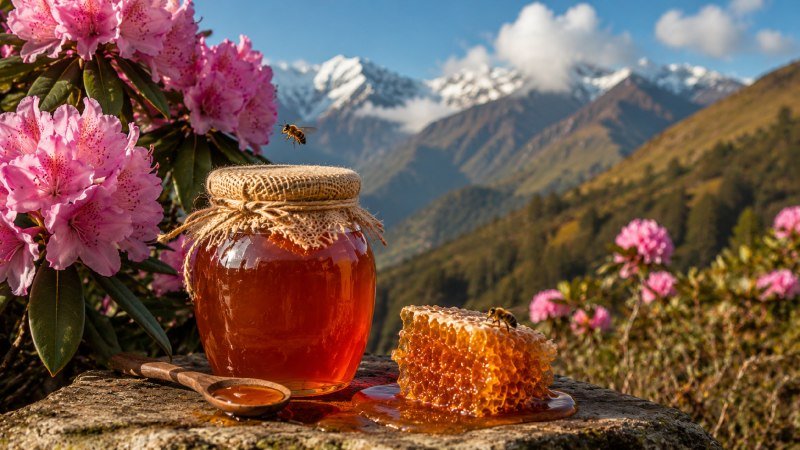
Exploring the Origins and Distinctive Qualities of Real Mad Honey
Mad honey is one of the world’s most unusual honey varieties, known for its distinctive origin, intense flavor, and naturally occurring compounds. Unlike ordinary honey, it comes from nectar collected from certain rhododendron flowers, giving it characteristics that have fascinated communities for generations.
Often associated with mountainous regions of Nepal and Turkey, real mad honey has a long history of traditional use. Its unusual properties have also made it a subject of culinary curiosity and scientific interest. However, it is important to understand that mad honey is not simply a stronger version of regular honey; it can contain grayanotoxins, which may cause poisoning when consumed in excessive amounts.
Its story is as distinctive as its flavor.
Where Does Mad Honey Come From?
Mad honey is most famously associated with the mountainous areas of Nepal and the Black Sea region of Turkey. These areas contain species of rhododendron whose flowers can provide nectar containing naturally occurring grayanotoxins.
Bees collect nectar from these flowers and transform it into honey in the same fundamental way they produce other varieties. The difference lies in the plant sources available to the bees. Because the concentration and presence of grayanotoxins can vary, mad honey can differ considerably from one harvest to another.
The surrounding environment plays an important role.
Traditional harvesting in mountainous regions can also be challenging because beekeepers and honey collectors may need to access remote cliffs and forests where the relevant rhododendron species grow.
What Makes Real Mad Honey Different?
The most distinctive feature of mad honey is its natural chemical composition. Certain rhododendron species contain grayanotoxins, compounds that can become present in honey when bees collect nectar from their flowers.
These compounds are responsible for the effects that distinguish mad honey from conventional varieties. The honey may also have a darker or reddish appearance depending on its botanical source and can possess a sharp, bitter, earthy, or unusually intense flavor.
It is not ordinary honey with a different label.
Because the concentration of grayanotoxins is not necessarily consistent, the strength of different batches can vary. This unpredictability is one reason mad honey should be approached with considerably more caution than everyday honey.
The Traditional History of Mad Honey
Mad honey has been known for centuries in regions where rhododendron plants are abundant. Historical accounts and traditional practices have contributed to its reputation as an unusual natural product with distinctive effects.
Some communities have traditionally valued small quantities of mad honey for cultural, culinary, or folk practices. These traditions form part of mad honey’s broader history, but they do not prove that the product can safely treat medical conditions.
Traditional use and modern medical evidence are not the same thing.
Understanding the history of mad honey is valuable, but responsible consumption requires recognizing the potential risks associated with its naturally occurring toxins.
The Distinctive Flavor Profile
One reason people are curious about authentic mad honey is its unusual taste. Unlike mild floral honey, it can have a strong, earthy flavor accompanied by bitterness or a noticeable sharpness.
The flavor depends on several factors, including the rhododendron species involved, geographical location, season, and other flowers available to bees during the collection period.
This creates considerable variation between different harvests. Some batches may be relatively mild, while others can have a much stronger taste and chemical profile.
Authenticity is about more than appearance.
Consumers interested in purchasing mad honey should pay attention to the product’s origin, harvesting information, and supplier transparency rather than relying only on color or taste.
Understanding Grayanotoxins
Grayanotoxins are naturally occurring compounds found in certain plants belonging to the Ericaceae family, including some rhododendron species. When honey contains sufficient amounts of these compounds, consumption can affect the body’s nervous and cardiovascular systems.
Possible symptoms of mad honey poisoning include dizziness, nausea, vomiting, weakness, sweating, blurred vision, low blood pressure, and changes in heart rate. More serious poisoning can require medical attention.
This is an important distinction between mad honey and ordinary honey.
The potential effects are dose-dependent, and the amount of grayanotoxin can vary between products. For this reason, there is no universally reliable “safe amount” that can be assumed for every batch.
Why Authenticity and Sourcing Matter
The growing interest in mad honey has created a market in which product descriptions and claims can vary significantly. Consumers should therefore be cautious about products marketed with exaggerated health or wellness promises.
A reputable seller should clearly explain where they harvested the honey and what the product actually contains.Avoiding vague claims and choosing transparent suppliers can help consumers make better-informed decisions.
Proper sourcing is particularly important because misidentified or adulterated honey may not have the characteristics buyers expect.
Know where your honey comes from.
Consumers should also remember that a product being described as “natural,” “traditional,” or “wild” does not automatically mean that it is harmless.
Mad Honey Compared With Regular Honey
Regular honey and mad honey share a basic production process, but their botanical sources and chemical characteristics can be very different. Conventional honey is generally consumed as a sweet food, whereas mad honey containing grayanotoxins carries additional safety considerations.
Regular honey varieties can differ in flavor, color, aroma, and nutritional composition depending on their floral sources. Mad honey adds another dimension because certain rhododendron-derived compounds can produce physiological effects.
The difference is significant.
People should not treat mad honey as an ordinary sweetener or assume that consuming a larger quantity will provide greater benefits.
Responsible Considerations for Consumers
Anyone considering mad honey should understand the potential risks before consuming it. People with cardiovascular conditions, low blood pressure, or those taking medications that affect heart rate or blood pressure should be especially cautious and seek appropriate medical advice.
Parents should not give mad honey to children as an experiment, and pregnant or breastfeeding individuals should consult a healthcare professional before consuming unusual products that contain pharmacologically active compounds.
If someone develops symptoms such as severe dizziness, fainting, vomiting, unusually slow heart rate, or low blood pressure after consuming mad honey, prompt medical attention is appropriate.
Curiosity should never replace caution.
The Cultural and Natural Appeal of Mad Honey
Despite its risks, mad honey remains fascinating because of its connection to specific ecosystems, traditional harvesting methods, and regional food cultures. Its existence demonstrates how closely food products can be connected to local plants and environments.
The mountainous landscapes where mad honey is traditionally produced also contribute to its distinctive identity. For many people, learning about this honey is less about seeking unusual effects and more about understanding its history, botanical origins, and cultural significance.
It is a remarkable example of nature influencing food.
Conclusion
Bees collect nectar from rhododendron flowers, and their surrounding environment shapes the distinctive natural product known as real mad honey. Its unusual flavor, regional heritage, and naturally occurring grayanotoxins separate it from conventional honey varieties.


