
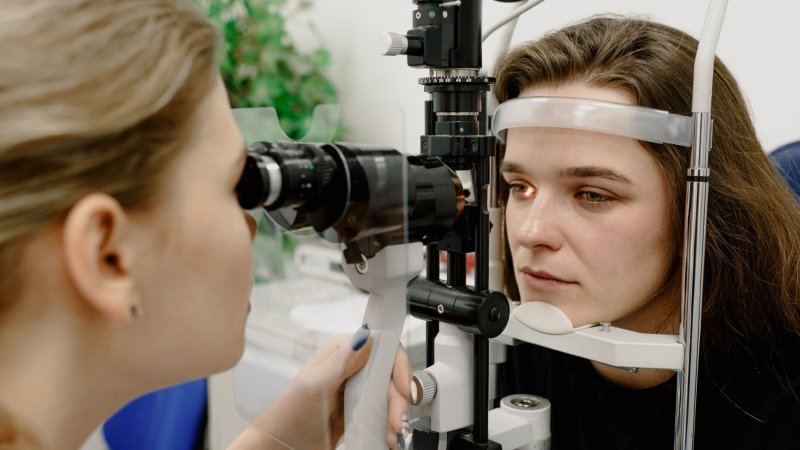
The Right Eye Doctor Can Change the Whole Visit
The right eye doctor can change the whole visit because the purpose of the appointment shapes the kind of care you need. A patient who wants new glasses may need a different visit than a patient with cataract glare, diabetes, contact lens discomfort, eye pain, glaucoma risk, or interest in LASIK. For someone searching for an eye doctor in Nashville, the best first step is to match the provider to the question your eyes are asking today.
Dr. James C. Loden from Loden Vision Centers, eye exams help patients understand their vision, evaluate eye health, and make confident decisions about routine, medical, or surgical care.
The National Eye Institute explains that either an optometrist or ophthalmologist can be a good option for general eye care, including comprehensive dilated eye exams and prescriptions for glasses or contacts.
The American Academy of Ophthalmology describes ophthalmologists as medical doctors who diagnose and treat eye diseases, perform surgery, and prescribe and fit eyeglasses and contact lenses.
In simple terms, optometrists often serve as primary eye care providers, while ophthalmologists bring medical and surgical eye care training to more complex or procedural situations.
Why A Clear Goal Makes The Appointment Easier
A clear goal makes the appointment easier because it tells the provider what problem to solve first. A visit for blurry distance vision may focus on refraction, glasses, contacts, and basic eye health. A visit for red eye, flashes, floaters, or pain may need medical evaluation. Visit for cataracts or LASIK may need surgical measurements, risk discussion, recovery planning, and a review of alternatives.
Patients often use the phrase “eye exam” for very different needs. One patient may mean “I need sharper vision for driving.” Another may mean “I have diabetes and need my retina checked.” Another may mean “My contacts hurt.” May mean “I want to know if I am a candidate for LASIK.” These are not the same visit, even if they all involve the eyes.
A better appointment starts with a better reason for the appointment.
Optometrists commonly help patients with routine vision correction, contact lenses, dry eye symptoms, screening, and referrals when needed. Ophthalmologists commonly help when the concern involves disease, surgery, complex diagnosis, or advanced treatment. Harris describes modern optometry as having moved from traditional refractive care into broader primary eye care, supported in many settings by tools such as slit lamps, visual field instruments, pachymeters, gonioprisms, and optical coherence tomography.
Machon similarly describes optometrists as primary healthcare practitioners for vision and eye care, with roles in diagnosis, triage, technology use, and referral.
How Eye Exams Uncover More Than A Prescription
Eye exams uncover more than a prescription because seeing clearly and having healthy eyes are related but not identical. A prescription tells how light focuses. A comprehensive exam can also evaluate the cornea, tear film, lens, retina, optic nerve, eye pressure, pupil response, and other structures.
The National Eye Institute states that a dilated eye exam is the only way to check for many eye diseases early, before vision loss occurs. That is why a patient may come in expecting glasses and leave with a recommendation for retinal imaging, glaucoma testing, cataract evaluation, dry eye care, or follow-up monitoring.
Research supports the value of routine eye exams as a way to identify unexpected findings. Dobbelsteyn and colleagues found that some asymptomatic patients presenting for routine optometric eye exams had pathology or risk factors that warranted referral for ophthalmological consultation.
That does not mean every routine visit uncovers disease. It means a routine visit can sometimes reveal a problem before the patient feels it.
An eye exam is most useful when it answers both questions: “How well do I see?” and “Why do my eyes see that way?”
This matters for everyday life. Blurry vision may be a simple prescription change. Fluctuating vision may be dry eye. Glare may be cataracts. Missing side vision may be glaucoma. Distortion may be a retinal disease. A careful exam helps separate a routine optical problem from a medical eye-health concern.
When Surgery, Disease, Or Complex Symptoms Need An Ophthalmologist
Surgery, disease, or complex symptoms may need an ophthalmologist because the next step can involve medical diagnosis, prescriptions, procedures, lasers, injections, or surgery. Cataracts, glaucoma progression, retinal disease, corneal disease, eye trauma, severe inflammation, sudden vision loss, or elective surgical vision correction all deserve the right level of medical and surgical evaluation.
The American Academy of Ophthalmology states that an ophthalmologist provides comprehensive, refractive, medical, and surgical eye care.
A comprehensive ophthalmologist can diagnose and treat eye diseases, perform eye surgery, and prescribe and fit glasses or contact lenses.
Cataracts are a common example. An optometrist may identify cataract symptoms and refer when surgery becomes appropriate. An ophthalmologist evaluates surgical timing, lens options, ocular health, recovery expectations, and risks. LASIK, PRK, SMILE, EVO ICL, and refractive lens exchange also require surgical candidacy testing. The doctor must evaluate corneal shape, prescription stability, tear film health, age, pupil size, retinal health, expectations, cost, and alternatives.
Complex symptoms should also guide the choice. Sudden vision loss, new flashes with floaters, a curtain or shadow, severe eye pain, eye injury, chemical exposure, or new double vision should not be treated like a routine glasses visit. These symptoms may need urgent medical care.
A surgical question should be answered by a surgical eye specialist. A medical eye warning should be answered by a medical eye evaluation.
Why Optometrists And Ophthalmologists Often Share The Same Mission
Optometrists and ophthalmologists often share the same mission because both work to protect sight, improve visual function, and guide patients to the right care. The difference is not the goal. The difference is the role each provider plays in the care path.
Shared care can work well when communication, training, and referral pathways are clear. O’Connor and colleagues found that shared care for chronic eye diseases was generally accepted by optometrists, ophthalmologists, and patients, with patients reporting travel-time savings and satisfaction with care.
Jamous and colleagues found that a collaborative glaucoma care model improved appropriate referrals to ophthalmologists and could help optimize patient care and resource use [9].
Cataract co-management also shows how shared care can support patients. Loke and colleagues reviewed post-cataract co-management models and found that co-management between ophthalmologists and optometrists has demonstrated feasibility and patient safety in some countries when supported by clear referrals, training, workflow guidelines, collaboration, and patient feedback.
Shared care works best when the patient knows who is responsible for what. The patient should understand who updates the prescription, who monitors the condition, who performs surgery, who manages complications, and when follow-up should happen.
The best eye care team does not make patients choose sides. It helps patients move smoothly from question to answer.
How Advanced Testing Supports Safer Decisions
Advanced testing supports safer decisions because the eye can change in ways that symptoms do not fully explain. Retinal photography, optical coherence tomography, visual field testing, corneal topography, eye pressure measurement, dry eye evaluation, and digital image sharing can help providers identify risk, document baselines, and decide when referral is appropriate.
Goudie and colleagues found that attaching digital images to optometry referrals improved ophthalmology triage quality, helped detect sight-threatening disease earlier, and allowed more appropriate allocation to specialist clinics.
Wang and Kalloniatis found that an optometry-led integrated care model identified many patients with or at risk of eye disease and could offer an alternate pathway for monitoring or referral.
Testing also affects vision correction and surgery decisions. Dry eye can affect LASIK comfort and cataract surgery satisfaction. Corneal mapping can affect LASIK, PRK, SMILE, and contact lens decisions. Retinal imaging can identify macular disease before cataract or refractive surgery planning. Visual fields and optic nerve testing can guide glaucoma decisions. Measurements are not just technical details. They are safety checkpoints.
Technology does not decide for the doctor. Technology gives the doctor better evidence for the decision.
A safer eye care plan uses technology when it answers a real question, not just because it is available.
Your best choice is the provider who can answer the next question. The next question is “Do I need glasses?” An optometrist may be the best starting point. If the next question is “Do I need cataract surgery?,” an ophthalmologist is the better fit. If the next question is “Can I safely have LASIK?” A surgical refractive evaluation is needed. The next question is “Is this retinal finding dangerous?,” retina-level evaluation may be needed.
Cost and insurance also matter. Routine vision exams, medical eye exams, contact lens fittings, retinal imaging, dry eye testing, cataract consultations, LASIK evaluations, and surgery follow-up may be covered differently. The right provider should explain the purpose of the visit, why testing is recommended, what alternatives exist, and what can safely wait.
The National Eye Institute advises patients to plan, ask questions, and keep asking until they understand their eye health and treatment plan. That advice applies whether the provider is an optometrist or an ophthalmologist. Good eye care is not only about the exam. It is about the patient understanding the plan.
A strong care path should also respect patient personas. A young contact lens wearer may need comfort and corneal safety. A busy professional may need screen comfort and dry eye care. A driver with glare may need cataract evaluation. A patient with diabetes may need retinal monitoring. A cautious patient may prefer glasses over surgery. A motivated surgical candidate may want a clear comparison of LASIK, PRK, SMILE, EVO ICL, refractive lens exchange, glasses, and contact lenses.
The final takeaway is simple. The right eye doctor can change the whole visit because the right provider can answer the right question sooner. Optometrists often help with routine vision needs, contact lenses, first-line concerns, and referrals. Ophthalmologists help when disease, surgery, complex symptoms, or advanced treatment enter the picture. The smartest choice is the provider who can move your eye care from uncertainty to a clear next step.


