
What Are Laboratory Reagents And How Are They Used In Scientific Research?
Laboratory research can be frustrating when materials used do not do what they are supposed to. Small changes in a buffer, reagent, or reaction condition can affect your sample, change your results, and make your experiment hard to repeat. You can use the same method every time and still get different results if the materials used are not suitable for the task.
This is where laboratory reagents are important. They aid in sample preparation, condition control, assist with reactions, identify biological targets, and verify outcomes of experiments. Using the right reagent can make even routine steps easier and minimize unnecessary test-to-test variations. In other words, reagents are a component of the process of converting a planned experiment into useful data.
In this article, you will learn what laboratory reagents are and how they are used in scientific research.
Understanding Laboratory Reagents and Their Role in Research
So, what exactly is a laboratory reagent?
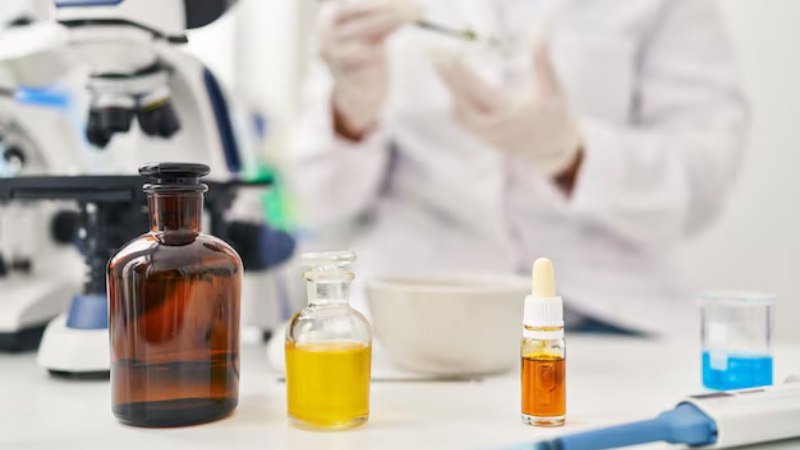
In simple terms, laboratory reagent is a substance or prepared solution used to carry out, support, or measure an experiment. Reagents may consist of buffers, enzymes, antibodies, dyes, salts, proteins, growth factors, or other chemical or biological compounds. It can be used to prepare a sample, control the pH, initiate a reaction, or identify a target.
Different reagents have different jobs, so you need to choose them based on your experiment. PBS may be used to wash cells and dilute samples, and HEPES may be used to maintain appropriate buffers for cell culture or biochemical applications. Other buffers like MES, MOPS, TAE, and TGS provide buffering for specific protein, DNA, RNA, and electrophoresis applications.
Quality is also important because variations in composition, concentration, purity, or storage can impact your findings and make it more difficult to repeat experiments.
Key Uses of Laboratory Reagents in Scientific Research
Now that you have an understanding of what laboratory reagents are, let’s look at what they actually do during common laboratory research processes.
1. Create Controlled Conditions for Laboratory Experiments
Before many experiments can begin, you need the right conditions for your samples. A laboratory reagent can help control pH, salt levels, osmotic conditions, or other factors that affect cells, proteins, and nucleic acids. This gives your experiment a stable starting point.
Think about a simple cell-washing step. PBS can help wash cells or dilute samples without creating harsh changes in their environment. HEPES, meanwhile, can help maintain pH during cell culture and other sensitive biological work. The key is choosing a buffer that fits the task.
Ready-to-use reagents can make these routine steps easier. You can use a prepared solution with a defined composition instead of making the same solution from scratch each time. This saves time and can reduce small preparation differences that affect results.
2. Enable Chemical and Biological Reactions
Many experiments depend on a reaction happening at the right time and under the right conditions. Reagents provide the chemicals, enzymes, ions, proteins, or other materials needed for that reaction. Without the right components, a reaction may be weak, slow, or fail altogether.
You can see this clearly in molecular biology. Enzymes may cut, join, copy, or modify DNA, while other reagents create the conditions those enzymes need. In protein and cell-based research, growth factors, cytokines, and supplements can also influence how cells or proteins respond.
The goal is to give the reaction a reliable environment. When pH, concentration, and other conditions are suitable, you have better control over what happens. This becomes especially useful when you repeat a method, compare samples, or need results that are easier to reproduce.
3. Detect and Measure Specific Biological Targets
Sometimes the challenge is not running the experiment but finding out what is actually in your sample. Reagents can recognize, bind to, or react with a specific target and produce a measurable signal. This helps you study proteins, cytokines, growth factors, and other biological markers.
For example, antibodies can recognize a particular protein, while ELISA reagents can help measure a target in serum, plasma, or cell culture samples. The right reagent can give you a clearer signal and reduce unwanted background. Specificity, sensitivity, and sample compatibility are therefore important when you make your choice.
Once the target produces a measurable signal, you have data you can compare. You might use it to see how cells respond to treatment, compare samples, or confirm that a protein is present. Reagents therefore help turn something difficult to see into information you can measure.
4. Support Sample Analysis and Experimental Validation
After a sample has been prepared or treated, you still need to find out what happened. Reagents help you process, separate, detect, and check the material so you can understand the result. In protein research, this may involve electrophoresis buffers, gels, transfer reagents, stains, blocking solutions, and antibodies.
Western blotting is a good example because several reagents work together in one workflow. A running buffer helps separate proteins, transfer materials move them onto a membrane, and antibodies help identify the protein you want to study. Each step depends on materials that fit the method and the next stage.
Reagents can also support validation, not just analysis. Controls, standards, markers, and other materials help you decide whether a result is meaningful or caused by a technical problem. This matters when you compare samples, repeat an experiment, or use your findings to plan the next step.
5. Maintain Accuracy and Reproducibility in Research
If you repeat an experiment tomorrow, you want the results to be close to what you saw today. Laboratory reagents can support that goal through known compositions, defined concentrations, and consistent performance. This matters even more when you work with many samples or compare results from different experiments.
Small preparation differences can sometimes create bigger problems than expected. A buffer made differently, for example, may change a reaction or affect how a sample behaves. Ready-to-use and quality-controlled reagents can reduce some of this variation and help you spend less time troubleshooting unexpected issues.
You can improve your workflow by choosing reagents based on the actual experiment, not simply what you have used before. Check the application, concentration, purity, storage conditions, compatibility, and quality information before you begin. That simple step can make your work easier to control, compare, and repeat.
Conclusion
Laboratory reagents support much more than a single step in a research protocol. They help you prepare samples, control experimental conditions, support reactions, detect biological targets, analyze results, and check whether your findings are reliable.
The right choice depends on your sample, method, and research goal. When you understand what each reagent does and use materials that fit your workflow, you can reduce avoidable variation and make your research easier to control, interpret, and repeat.