
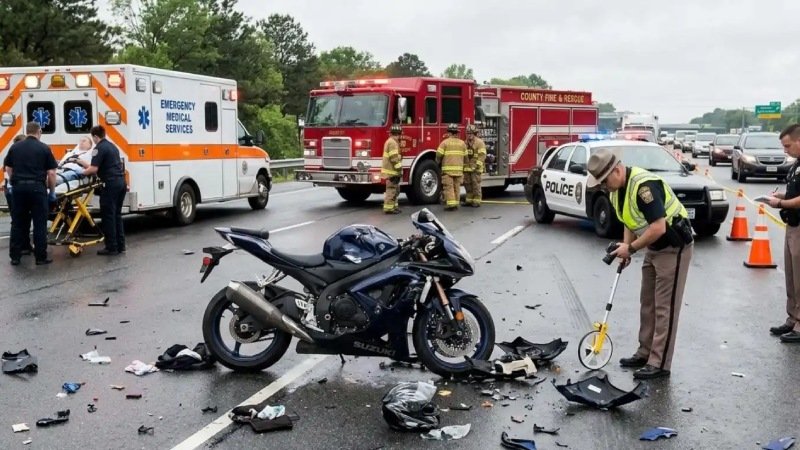
Motorcycle crashes continued to account for a disproportionate share of traffic fatalities in the United States in 2025.
According to the latest available data from the National Highway Traffic Safety Administration (NHTSA), traffic crashes killed more than 6,000 motorcyclists and injured tens of thousands more each year.But still, motorcyclists remain significantly more likely to suffer fatal injuries than occupants of passenger vehicles.
A collision involving motorcycles leads to more serious injuries compared to accidents involving other types of vehicles due to the rider’s lack of protection. Riders may suffer traumatic brain injuries, spinal cord injuries, fractures, road rash, and many others.
All these can lead to a series of complications that require costly medical treatment and care. For the victims of such accidents, it is important to know about their legal rights and options for recovery.
Here’s what to do after a motorcycle accident to help you pursue compensation while protecting your rights throughout the claims process.
The Injuries That Define Motorcycle Accident Claims
One of the most common and severe consequences of a motorcycle accident is traumatic brain injury. The implications of TBI may vary from temporary aftereffects such as impaired concentration to permanent loss of certain skills or abilities.
The problem is that TBI cases always involve a gap between the first symptoms and the point at which doctors recognize the severity of the injury. An individual may return to the hospital a few days or weeks after a minor head injury, only to learn that the condition is much more serious.
You should seek proper medical attention after any motorcycle accident so healthcare providers can identify all potential injuries and help strengthen your personal injury claim.
Spinal cord injuries carry some of the biggest long-term bills in all of personal injury law. The National Spinal Cord Injury Statistical Center says there are about 18,000 new spinal cord injuries in the U.S. each year, with motor vehicle crashes, including motorcycles, making up nearly 40 percent of new cases.
The result in these cases typically includes permanent disability, rehabilitation, equipment to help them cope with that disability, and most commonly the inability to go back to their old job. In serious cases of spinal cord injury, future medical expenses run into millions of dollars, and life care planning done by a certified planner becomes the basis of the present value of future expenses.
There are many degrees of road rash, ranging from superficial skin cuts to those that require surgical intervention, skin grafts, and lengthy healing times.
Fractures that involve metal plates and screws take a long time to heal. With it, patients will have their mobility and strength affected over time. Internal injuries in organs such as the spleen, kidneys, or liver are also possible. And for these cases, the symptoms don’t show immediately.
The injury to the abdomen and internal organs can turn fatal when not urgently attended to. An individual who has suffered an injury to the abdomen must visit the hospital immediately regardless of the severity of the other injuries.
How Fault Is Evaluated in Motorcycle Accident Cases
In multiple vehicle collisions involving motorcycles, the other driver is frequently found to be at fault. According to the reports of these accidents, the other driver has either failed to see the approaching motorcyclist or misjudged the speed at which he was riding when making a turn.
Fault is usually judged through the same negligence framework used in any personal injury claim. They look at duty of care, breach, causation, and damages. Some insurers and defense attorneys tend to automatically blame riders for their injuries, despite evidence that may point in a different direction.
Most states utilize a form of comparative negligence, allowing a rider who bears some fault in a collision to recover damages, but the awarded amount will be decreased according to how much they are at fault.
When insurers discuss contributory negligence, they often mention factors such as helmet usage, riding speed, and the rider’s lane position.
California firm’s Glendale personal injury lawyer Robert F. Castillo explains how the state’s pure comparative negligence rule applies even when a claimant bears most of the fault, stating that the claimant has the opportunity to file a claim against another party who is only 1% at fault.
That example shows how states handle shared fault. The result may be uneven between parties. In jurisdictions that follow modified comparative fault rules, recovery is typically barred when the plaintiff’s percentage of fault reaches 50 or 51 percent.
Some states employ a strict contributory negligence rule. In such cases, if the plaintiff is even partially at fault, they cannot recover damages, regardless of the defendant’s involvement.
What a Motorcycle Accident Claim Can Include
After a personal injury claim tied to a motorcycle crash, you are usually looking at both financial and non-financial losses. Economic damages tend to cover past and future medical bills, rehab therapy, and even home assistance costs. This also includes income lost for days missed while healing and also reduced earning capacity if the injury permanently restricts what work a rider can actually return to.
Non-economic damages go after the human impact, such as pain and suffering, permanent disfigurement, the diminished ability to take part in activities the rider can no longer do, and sometimes emotional distress, plus psychological harm.
What to Do in the Period After a Motorcycle Crash
What happens in the days and weeks after a motorbike accident can significantly affect the strength of your claim.
You have to make sure to get a full medical evaluation before assuming anything about your injuries. Having follow-ups with specialists when symptoms change or slowly show themselves.
Be sure to document the exact place where the accident happened as well as possible according to the available circumstances. Photos should include places of collision, road conditions, skid marks, traffic signals, all visible signs of damage, and other details of the incident.
Try to obtain contact information from witnesses while they are present at the scene. Leave your motorcycle and all riding equipment untouched since physical evidence in connection with collision and damage may play an important role in identifying liability and filing for compensation.
Alert your insurer promptly. Most policies have contractual notice rules that differ from, and are often much shorter than, the legal filing deadline, and missing them can trigger a separate coverage dispute over fault. Do not give a recorded statement to the other side’s insurer before speaking with an attorney.
Motorcycle accidents produce injury outcomes that car accident claims rarely even reach in severity and also long-term costs.
Standard insurance settlements often fail to properly address damages like career-ending spinal cord injuries, lasting personality and cognitive changes from traumatic brain injuries, or extensive road rash that needs prolonged wound care, unless an experienced lawyer provides strategic legal guidance.
The first few days following an accident shape your recovery further down the line.