How Personal Training Helps Prevent Falls in Older Adults
Falls are a serious concern for older adults, but many can be prevented with the right type of exercise and support. Personal training can improve strength, balance, coordination, and confidence, all of which help seniors move more safely during everyday activities.
A personalized fitness plan is especially useful because every older adult has different abilities, health concerns, and mobility limitations. Instead of following a general workout, seniors can practice exercises that match their current fitness level and address their specific risk factors.
Building Lower-Body Strength
Strong legs are essential for walking, standing, climbing stairs, and getting in and out of chairs. When the muscles in the hips, thighs, and calves become weak, it is harder to recover after stumbling or losing balance.
A trainer may include simple exercises such as:
- Chair squats or sit-to-stand movements
- Supported calf raises
- Step-ups on a low platform
- Side leg lifts
- Gentle resistance-band exercises
These movements can be adjusted to suit the individual. A senior may begin by holding a chair or wall for support and gradually progress as strength improves.
Improving Balance and Stability
Balance often declines with age, especially when a person becomes less active. Vision changes, reduced muscle strength, medication side effects, and certain medical conditions can also increase the risk of falling.
A qualified personal trainer for seniors can introduce safe balance exercises in a controlled setting. These may include standing with the feet closer together, shifting weight from side to side, walking in a straight line, or briefly standing on one leg while holding a stable surface.
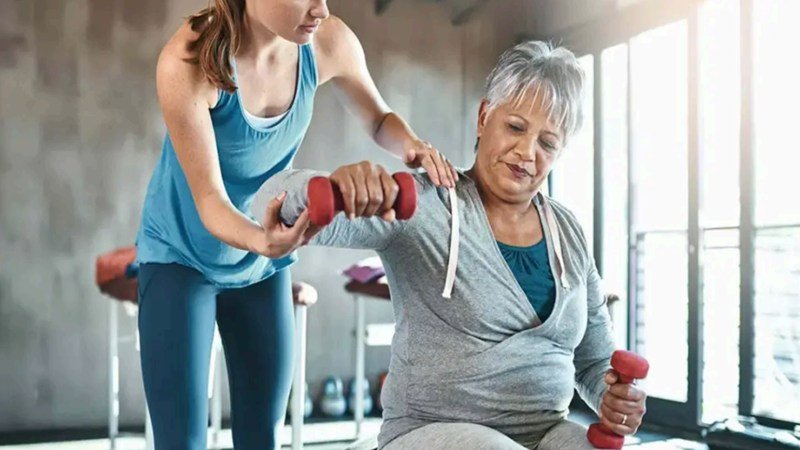
The trainer stays nearby and provides assistance when needed. This allows the older adult to practice challenging movements without taking unnecessary risks.
Making Everyday Movements Safer
Fall prevention training should support real-life activities, not just gym exercises. Seniors need to turn, reach, bend, step over objects, and move through narrow spaces at home.
A trainer may practice movements such as picking up a light object from the floor, turning without crossing the feet, or walking while changing direction. These exercises help improve coordination and teach safer movement habits.
For people who prefer to exercise at home, in-home personal training in Toronto can make sessions more practical. The trainer can observe the actual home environment and identify areas or movements that may pose difficulty, such as stairs, rugs, or low furniture.
Increasing Confidence Without Encouraging Overconfidence
After experiencing a fall, many older adults become afraid of falling again. This fear may cause them to walk less, avoid stairs, or stop participating in activities they enjoy.
Reduced activity can lead to further muscle weakness, making future falls more likely.
Supervised training helps seniors gradually rebuild confidence. They learn what their bodies can safely do while also understanding their limitations.
Supporting Consistency and Proper Technique
Exercises only help when they are performed regularly and correctly. A personal trainer provides structure, monitors technique, and adjusts the program when an exercise becomes too easy or uncomfortable.
The trainer can also work alongside healthcare providers when necessary, particularly if the senior is recovering from an injury, managing arthritis, or living with a condition that affects movement. With steady practice and appropriate guidance, older adults can maintain greater independence and feel more secure as they navigate daily life.