
How Much Does It Cost to Manufacture Supplements?
What do you think the cost of producing dietary supplements is?
Starting a new supplement brand typically takes around $2,000 to $20,000 to get going. This pricing changes depending on 3 simple choices. It relies on the ingredients you use, the style of your bottles, and the factory partner you hire. To see where your money actually goes, you have to look closely at the manufacturing routes.
Production Models: Stock Formulas vs. Custom Recipes
Going with Private Labeling
Choosing a pre-made stock product allows you to skip laboratory testing, shelf-life analysis, and initial regulatory registration fees. This lowers the entry barrier significantly, meaning a new brand can go live quickly on a tight budget. Most fitness creators, startups, and e-commerce stores utilize this path because a modest investment of $2,000 to $5,000 covers everything required to start selling under their own label.
Creating a Custom Formula (OEM & ODM)
Depending on your technical setup, you will choose between two main custom pathways:
- OEM (Original Equipment Manufacturing): You provide your exact proprietary recipe. The supplement factory handles bulk raw material sourcing, precise mixing, and machine line assembly using your blueprint.
- ODM (Original Design Manufacturing): Choosing ODM means the factory builds your unique recipe from the ground up. They handle the complete manufacturing process including your product taste and the outer box design.
This option usually needs an initial budget of $10,000 to more than $25,000.
This route takes more money because you have to pay for recipe testing, special plant items, and small lab batches to see if everything works right.
What Makes Supplement Production Costly?
If you want to manage your business cash properly, you have to look at what actually drives up your bills in the factory. Here is exactly where your money goes:
1. Product Format & Delivery Systems
The physical style of your supplement dictates the machinery required, labor overhead, and manufacturing speed:
• Tablets & Powders: The most cost-effective routes. Mass production carries low operational costs and offers maximum shelf stability.
• Hard Capsules: Marginally more expensive than tablets, but highly favored by consumers for fast dissolution.
• Liquids & Softgels: High-investment formats requiring complex encapsulation machinery and precision liquid-filling hardware.
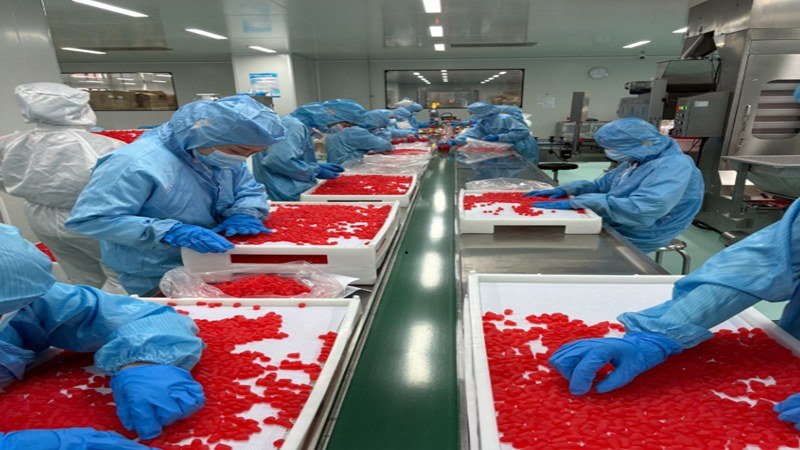
• Gummies: The most premium delivery format today, demanding advanced molding setups and climate-controlled logistics.
2. Raw Material Quality
Commodity ingredients like Vitamin C, Calcium, or Magnesium are inexpensive and widely available. The cost equation shifts when you move into specialty territory — Organic, Non-GMO, Halal, Kosher, or Vegan certifications all require sourcing from approved suppliers, adding meaningful cost to your bill of materials. If your brand positioning centers on clean-label credentials, this is a necessary investment, not a surprise.
3. Factory Order Limits (MOQs)
Every production run requires hours of line calibration and sanitation between batches — overhead that factories recover through volume requirements. Domestic manufacturers typically demand MOQs of 5,000 to 10,000 units per SKU, which creates significant upfront inventory risk for new brands. International contract manufacturers often offer far more flexible starting quantities, allowing you to validate a product in the market before scaling production.
Certifications & Compliance Costs
Standard factory quality checks are typically included in your production quote. Third-party certifications — Halal, HACCP, ISO 22000, GMP, NSF — are not. Each certification carries its own audit, documentation, and annual renewal fees. If your target market or retail channel requires specific certifications, budget for them explicitly from day one. Retrofitting compliance after launch is always more expensive than building it in from the start.
Packaging & Post-Production Costs
This is where new brand owners most frequently overspend without realizing it. Your total cost can nearly double when you factor in:
Packaging materials — glass jars and custom pouches cost significantly more than standard plastic bottles.
Label design & printing — professional design is non-negotiable if you want shelf credibility.
Logistics — large powder containers and liquid formats are heavy. Freight, import duties, and warehousing costs must be calculated into your unit economics from the start, not treated as an afterthought.
Maximizing Profit Margins Through Global Sourcing
Sourcing your inventory from an experienced overseas facility helps Amazon brands and retail lines cut down massive overhead expenses without losing out on quality. Partnering with an international contract manufacturer grants your business direct access to advanced factory setups at a fraction of domestic costs.
If you require a flexible, wallet-friendly manufacturing partner, checking out professional setups like JBK Supplements can help you secure premium items while keeping your profit margins safe.
Before committing capital, audit your supplier’s full lineup of verified private label supplement For Startup offerings to ensure they possess the right tooling and machines ready for your brand. Selecting an experienced Chinese Supplement manufacturer that openly provides full OEM/ODM services ensures you can scale seamlessly from basic vitamins to custom blends with the exact same team.
Other Essential Costs to Consider
New brand owners frequently burn through their budget on the core formula, neglecting critical post-production expenses. Your total bill can double fast if you pick glass jars or pouches instead of plain plastic bottles. You also need cash for clean label designs to look real to buyers. Plus, factories cover basic safety checks, but getting special stamps like Halal, HACCP, or ISO setup costs extra. Lastly, large powder tubs and liquid boxes get heavy. You must always add freight delivery, import duties, and warehouse space costs into your initial funds.
Total Setup Budget Comparison
Initial capital requirements vary widely based on your production route, typically ranging from a lean $2,650 – $6,100 for a turn-key private label setup up to $16,800 – $32,000+ for an advanced custom formula project. Ready-made stock products save you cash on recipe setup and lab work. But making custom blends needs extra funds for unique formulas, special certificates, and premium design. Working with a complete supplier like JBK Supplements handles everything under one roof. They manage design, factory production, and shipping together. This drops your total cost per unit and keeps your startup budget safe.
Bottom Line
Stop burning capital on expensive factory infrastructure. Partnering with a vetted contract manufacturer like JBK Supplements hands your business advanced production lines and seamless worldwide shipping right away. This operational shortcut leaves your team completely free to manage marketing, drive daily web traffic, and scale long-term brand equity.


